A quality garden fork transforms soil work. The right tool slides through compacted soil, lifts clumps of perennials without snapping their roots and tackles clay effectively. We tested seven leading UK models across three seasons.
Quick Comparison Table
|
Fork |
Best For |
Type |
Price |
|
Spear & Jackson Traditional Stainless Steel Digging Fork |
Best overall |
Digging fork |
See card for current price |
|
Spear & Jackson Select Stainless Steel Border Fork |
Best border fork |
Border fork |
See card for current price |
|
Bulldog Premier Digging Fork YD |
Best for clay and heavy soil |
Forged digging fork |
See card for current price |
|
Wilkinson Sword Stainless Steel Digging Fork |
Best ergonomic pick |
Digging fork |
See card for current price |
|
Burgon & Ball RHS Stainless Border Fork |
Best premium border fork |
Border fork |
See card for current price |
|
Fiskars Ergonomic Garden Fork |
Best lightweight fork |
Digging fork |
See card for current price |
|
Spear & Jackson Neverbend Carbon Steel Digging Fork |
Best budget heavy-duty |
Digging fork |
See card for current price |
Product Reviews
1. Spear & Jackson Traditional Stainless Steel Digging Fork
The Traditional range has been a staple of British sheds for decades. The mirror-polished stainless head gives clean release on wet soil, and four square tines handle general digging and lifting. At approximately 1.95kg with a hardwood shaft and weatherproof grip, it balances weight and control effectively.
Key specs: – Head: Mirror-polished stainless steel, 4 tines – Shaft: Hardwood with PYD weatherproof grip – Length: Approximately 99cm overall – Weight: Approximately 1.95kg – Guarantee: 10 years
Pros: – Clean release on sticky clay – Well balanced – Fairly priced – 10-year guarantee
Cons: – The polished head can scratch in stony ground, though this doesn’t affect performance
Best for: most UK gardens, most of the time.


2. Spear & Jackson Select Stainless Steel Border Fork
This smaller fork suits gardeners spending time on their knees among the perennials. The narrower head and shorter tines keep weight down to about 1.64kg. It has received BBC Gardeners’ World Best Buy recognition.
Key specs: – Head: Stainless steel, 4 tines, narrower profile – Shaft: Hardwood with grip handle – Length: Approximately 95cm overall – Weight: Approximately 1.64kg – Guarantee: Check listing for current guarantee terms
Pros: – Light and compact – Well made – Ideal for tight spaces and raised beds
Cons: – Not suitable for breaking new ground or heavy double-digging
Best for: planting, weeding and working in narrow borders or raised beds.

3. Bulldog Premier Digging Fork YD
Bulldog has forged tools since 1780, and the Premier exemplifies their durability. The head is solid forged from a single piece of steel, with no welds where the socket meets the tines, a critical failure point in lesser designs. The epoxy coating resists rust, and the YD-grip is comfortable for long sessions.
Key specs: – Head: Solid forged carbon steel, 4 tines – Shaft: Ash wood with YD-grip handle – Length: Approximately 100cm overall – Weight: Approximately 2.4kg – Coating: Epoxy paint
Pros: – Genuinely tough and built for hard use – Perfect for clay – Classic British craftsmanship
Cons: – At over 2.4kg, heavier than most stainless models, so extended digging is more tiring
Best for: clay-heavy gardens and anyone who has ever bent a fork tine.
4. Wilkinson Sword Stainless Steel Digging Fork
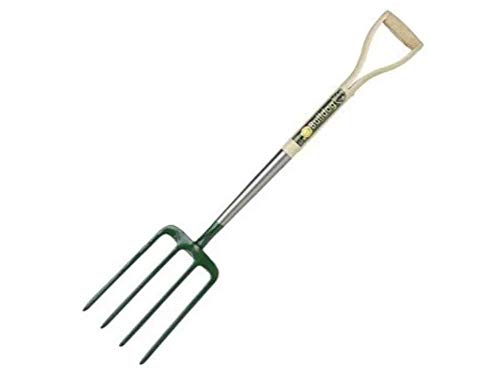
This model combines polished stainless with ergonomic design. The softer-feeling shaft and grip and larger D-grip accommodate bigger hands. A subtle shaft taper improves balance when loaded with soil. At around 1.8kg, it remains sturdy for normal garden work.
Key specs: – Head: Stainless steel, 4 tines – Shaft: Hardwood with D-grip handle – Length: Approximately 100cm overall – Weight: Approximately 1.8kg – Guarantee: 10 years
Pros: – Very comfortable D-grip – Light in hand – Smart-looking polished head
Cons: – Not as bombproof as a forged Bulldog on stony or compacted ground
Best for: comfort over a long gardening session.
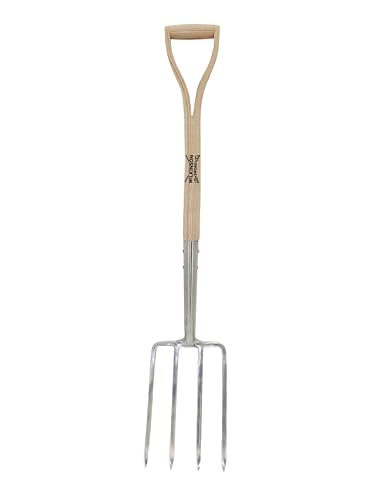
5. Burgon & Ball RHS Stainless Border Fork
Burgon & Ball holds RHS endorsement. The stainless border fork has a slimmer head than the Spear & Jackson Select, with an FSC-certified ash shaft. The finish reflects build quality aimed at serious gardeners.
Key specs: – Head: Stainless steel, 4 tines, narrow border profile – Shaft: FSC-certified ash – Length: Approximately 96cm overall – Weight: Approximately 1.55kg – Endorsement: Royal Horticultural Society
Pros: – Beautifully made – Comfortable for hours – RHS endorsed
Cons: – Price reflects finish, so it is overkill if tools are regularly left in rain
Best for: a gift-quality fork that gets used every weekend.

6. Fiskars Ergonomic Garden Fork
Fiskars pairs a hardened boron steel head with a light, stiff aluminium shaft wrapped in a non-slip grip. The angled handle encourages a more upright digging stance, easing back strain on prepared beds and lighter loam.
Key specs: – Head: Hardened boron steel, 4 tines – Shaft: Aluminium with ergonomic grip – Length: Approximately 122cm overall – Guarantee: Long Fiskars guarantee (check listing)
Pros: – Light and comfortable angled grip – Easy on the back over long sessions – Long guarantee
Cons: – The aluminium shaft cannot handle serious levering of rocks or roots
Best for: gardeners with back or wrist trouble.

7. Spear & Jackson Neverbend Carbon Steel Digging Fork
The Neverbend carbon steel range is one of the best-value heavy-duty forks in Britain. The forged head tolerates serious levering that would concern lighter models. The black epoxy coating provides rust protection, though the head needs wiping after damp use.
Key specs: – Head: Forged carbon steel, 4 tines – Shaft: Hardwood with PYD-grip handle – Length: Approximately 99cm overall – Weight: Approximately 2.0kg – Guarantee: 10 years
Pros: – Strong – Well priced – Long-lasting carbon steel head
Cons: – Carbon steel will rust if left wet, so it needs a quick wipe and oil between uses
Best for: a tough, no-nonsense fork on a tighter budget.

How to Choose the Best Garden Fork for Your Needs
Digging Fork or Border Fork?
A digging fork features broader, longer tines designed for breaking up soil, turning compost or lifting heavy clumps. A border fork has a narrower head that fits between established plants and is lighter in weight. Most gardens benefit from both; choose whichever matches your primary gardening work.
Stainless Steel vs Carbon Steel
Stainless heads slide in and out of soil more easily due to reduced friction, and perform particularly well on clay where carbon steel can hold on to wet earth and clog up. Carbon steel forks are stronger and cheaper but require maintenance to prevent rust. Forged carbon steel is in a class of its own for strength, ideal for those levering tree roots or breaking compacted ground.
Shafts and Handles
Hardwood shafts (typically ash) feel traditional, resist breakage from impacts, and are replaceable if damaged. Aluminium and composite shafts are lighter and weather-resistant but transmit more shock when striking rocks.
Three handle shapes exist: D-grips are most common in the UK and suit most hands; T-grips provide more leverage when twisting; YD-grips combine the two and are the comfiest choice for long sessions.
Weight, Length and Your Build
Heavier forks require more lifting energy but perform more work penetrating soil. Lighter forks ease back and shoulder strain. Taller gardeners should seek forks exceeding 100cm; shorter gardeners often prefer 90-95cm border forks.
How Much Should You Spend?
A budget fork is perfectly serviceable for occasional use. Spending a little more moves into stainless steel with extended guarantees, which regular gardeners typically find worthwhile. At the top end you get forged construction and premium finishes for those gardening frequently on heavy soil. See each card for current pricing.
Frequently Asked Questions
Will a stainless steel fork rust?
True stainless steel won’t rust under normal garden conditions. It may pick up surface marks from stone scraping or damp metal storage, but these are cosmetic and don’t affect performance.
How do I stop my garden fork from bending?
Match the tool to the task. Use a forged-head digging fork for heavy clay or stony ground, a stainless digging fork for general work, and a border fork for narrow spaces. Avoid using your fork as a lever to prise out large rocks—employ a crowbar for that purpose.
What is the best garden fork for clay soil?
Clay requires either a forged carbon steel fork like the Bulldog Premier, which won’t flex when you lever, or a polished stainless steel fork like the Spear & Jackson Traditional, which sheds sticky soil. We use both depending on ground moisture conditions.
How do I look after a wooden-shafted fork?
Wipe the shaft clean of mud and store indoors or under cover. Annually, rub in some boiled linseed oil to keep the wood from drying out, and check the rivets where the head meets the shaft are still tight. Quality forks can last decades with this care.
Verdict
The Spear & Jackson Traditional Stainless Steel Digging Fork is our pick for most UK gardens: well balanced, effective on sticky clay, sensibly priced, and backed by a serious guarantee.
For stubborn clay or regular ground-breaking work, the Bulldog Premier Digging Fork suits the job and will probably outlast you. For raised beds, ornamental borders, or those finding full-size forks tiring, the Spear & Jackson Select Stainless Border Fork is a straightforward recommendation.