When you’ve got a sprawling garden, tough undergrowth, or thick vegetation that laughs in the face of a cordless strimmer, it’s time to bring out the heavy artillery. Petrol strimmers (or brushcutters, as some call them) are the workhorses of the garden world. They pack genuine power, virtually unlimited runtime, and the ability to tackle jobs that would leave electric tools struggling.
But here’s the thing: choosing the right petrol strimmer can feel overwhelming. There are 2-stroke engines, 4-stroke engines, bike handles, loop handles, and prices ranging from under £100 to over £400. That’s where we come in.
In this guide, we’ve tested and reviewed the six best petrol strimmers currently available in the UK. Whether you’re a smallholder with acres to maintain, a property manager keeping hedgerows in check, or a keen gardener who’s finally decided to upgrade from your electric trimmer, you’ll find the perfect match here.
Quick Comparison Table
| Model | Engine Size | Type | Price | Best For |
| STIHL FS 55 R | 27.2cc | 2-Stroke | Around £265-270 | Homeowners |
| McCulloch TrimMac | 25cc | 2-Stroke | Around £100-130 | Budget buyers |
| Mountfield MB33D | 33cc | 2-Stroke | Around £180-220 | Mid-range buyers |
| Husqvarna 128R | 28cc | 2-Stroke | Around £300-330 | Multi-purpose |
| Makita EM2651UH | 25.7cc | 4-Stroke | Around £350-400 | Quiet operation |
| Honda UMK 435 UE | 35cc | 4-Stroke | Around £450-500 | Heavy-duty work |


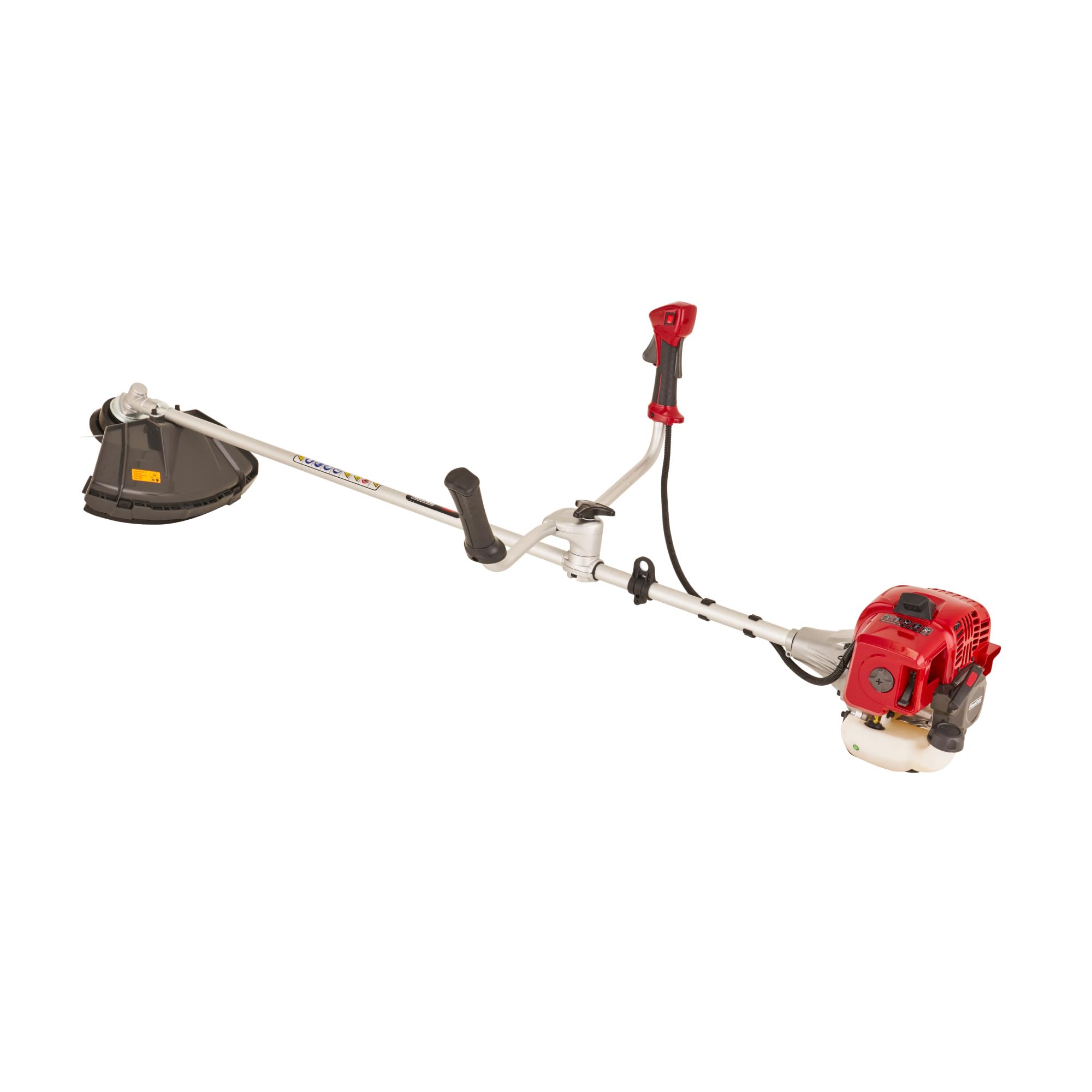

Detailed Reviews
STIHL FS 55 R: Best All-Rounder
Engine: 27.2cc 2-stroke | Handle: Loop | Weight: 4.5kg | Price: Around £265-270
The STIHL FS 55 R is quite possibly the best petrol strimmer for UK homeowners making the step up from electric. It’s a beautifully balanced machine that offers genuine power without the heft or complexity of larger models.
The 2-MIX engine technology means lower fuel consumption, reduced emissions, and the bonus that you can use petrol mixed with any standard 2-stroke oil (no need for pre-mixed cans). The loop handle gives excellent control for edging and precision work around flower beds. Runtime is limited only by your fuel tank, making it perfect for larger gardens without the fatigue factor that cordless strimmers can bring.
Pros:
- Excellent build quality – STIHL’s reputation for durability is well earned
- Fuel-efficient 2-MIX engine keeps running costs reasonable
- Loop handle ideal for precision trimming and edging
- Lightweight and well-balanced, reducing fatigue on longer jobs
- Reliable British servicing network
Cons:
- Pricier than budget alternatives
- Loop handle isn’t ideal if you want to tackle thick woody growth
- Requires fuel mixing (though easy enough once you get the hang of it)
McCulloch TrimMac: Best Budget Option
Engine: 25cc 2-stroke | Handle: Loop | Weight: 3.9kg | Price: Around £100-130
Don’t let the budget price fool you. The McCulloch TrimMac is a legitimate entry point into petrol strimming, and it punches well above its weight. At just 3.9kg, it’s one of the lightest options on the market, making it ideal for anyone worried about arm fatigue or users with less upper body strength.
The 25cc 2-stroke engine is modest but adequate for normal garden maintenance. You’ll be mixing your own fuel, but at this price point, that’s a fair trade-off. It’s an excellent machine for testing whether petrol strimming is right for you before committing to a premium model.
Pros:
- Exceptional value for money – often the cheapest petrol option
- Very lightweight, making it accessible for all users
- Perfect starter machine for those new to petrol tools
- Loop handle for precise edging and trimming
Cons:
- Engine size limits power for tougher jobs
- Build quality not quite at the level of premium brands
- Less spare parts availability across the UK
Mountfield MB33D: Best Mid-Range Pick
Engine: 33cc 2-stroke | Handle: Bike | Weight: 5.2kg | Price: Around £180-220
The Mountfield MB33D represents genuine value in the mid-range segment. It’s what we’d call a Goldilocks machine – more powerful than budget models, less expensive than premium brands, and just right for serious amateur gardeners.
The 33cc engine gives you noticeably more cutting power than smaller machines, and the bike-style handle (resembling a motorcycle throttle) is brilliant for those who want to tackle tougher vegetation. The dual-line bump feed system means you’re always ready to keep cutting without fiddling around with manual line advancement.
Pros:
- Excellent power-to-price ratio
- Bike handle great for tackling woody stems and tough growth
- Dual-line bump feed keeps you working longer between stops
- Outstanding user reviews for reliability
- Good dealer network in the UK
Cons:
- Slightly heavier than loop-handled models
- Requires fuel mixing like all 2-stroke engines
Husqvarna 128R: Best Multi-Purpose Machine
Engine: 28cc 2-stroke | Handle: Bike | Weight: 5.1kg | Price: Around £300-330
Husqvarna is a name synonymous with quality outdoor power tools, and the 128R proves why. This is a beautifully engineered piece of kit that comes supplied with both a strimmer head and a blade, making it genuinely versatile.
The bike-style handle is superbly crafted, and the 28cc engine sits in a sweet spot for both general trimming and tackling thicker material. Husqvarna’s reputation for durability is fully justified here – this is a machine that will keep working, year after year, with minimal fuss.
Pros:
- Supplied with both strimmer head and blade – true multi-purpose
- Premium build quality justifies the price tag
- Bike handle and weight distribution excellent for control
- Excellent spares and servicing availability across the UK
- Professional-grade reliability for home users
Cons:
- Premium pricing – you’re paying for the name and quality
- Still requires fuel mixing
Makita EM2651UH: Best for Quiet Operation
Engine: 25.7cc 4-stroke | Handle: Bike | Weight: 5.5kg | Price: Around £350-400
If noise is your enemy – perhaps you’ve got close neighbours or you prefer working in the early morning – the Makita EM2651UH is worth serious consideration. It’s one of the few petrol strimmers using a 4-stroke engine, which means considerably lower noise levels and fewer emissions than 2-stroke rivals.
The 4-stroke engine also means no fuel mixing required – just add petrol and oil separately, like you would with a car. For many users, this eliminates the biggest hassle of petrol tool ownership. The bike handle and balanced weight make it comfortable to use for extended periods.
Pros:
- Significantly quieter than 2-stroke engines – great for neighbourly relations
- 4-stroke means no fuel mixing required
- Lower emissions – better for the environment
- Makita’s solid reputation for power tool quality
- Decent spares availability
Cons:
- Premium price for what is a modest engine size
- Slightly heavier than 2-stroke alternatives
- Not quite as widely stocked as STIHL or Husqvarna
Honda UMK 435 UE: Best for Heavy-Duty Work
Engine: 35cc 4-stroke | Handle: Bike | Weight: 5.9kg | Price: Around £450-500
If you’re running a smallholding, managing grounds professionally, or simply have acres of challenging terrain, the Honda UMK 435 UE is the powerhouse you need. This is the largest engine in our review, and it shows in the sheer cutting power on offer.
Like the Makita, it’s a 4-stroke machine, so no fuel mixing headaches. Honda’s engineering excellence is evident throughout – this is a machine built to last through years of heavy use. The bike handle keeps things manageable despite the extra weight, and the 35cc engine will power through vegetation that would tax smaller machines.
Pros:
- Genuine power for heavy-duty cutting work
- 4-stroke engine means no fuel mixing
- Honda reliability is legendary – built for years of use
- Quiet for its engine size
- Excellent for professional and commercial use
Cons:
- Heaviest machine in our lineup – not ideal if weight is a concern
- Most expensive option by some margin
- Potentially overkill for average domestic use
Petrol Strimmer Buying Guide
2-Stroke vs 4-Stroke Engines
This is the biggest decision you’ll make when choosing a petrol strimmer:
2-Stroke engines are lightweight and powerful for their size, which is why they’re standard on most affordable strimmers. You’ll need to mix petrol with 2-stroke oil before use (typically at a 50:1 ratio, though always check your manual). They’re noisier and produce more emissions than 4-stroke alternatives.
4-Stroke engines (like those on the Makita and Honda) run on straight petrol with separate oil top-ups, just like a car. They’re quieter, cleaner, and more fuel-efficient. The trade-off? They’re heavier and more complex, which explains why they’re reserved for premium models.
Engine Size: What You Actually Need
Measured in cubic centimetres (cc), engine size correlates roughly with power and cutting ability:
- 20-26cc: Light domestic use, small gardens, regular maintenance only
- 26-33cc: General gardening, mixed vegetation, most users’ sweet spot
- 33cc+: Heavy-duty work, dense growth, professional use
Handle Types: Loop vs Bike
The loop handle (a D-shaped ring) offers the lightest weight and best manoeuvrability for precision work like edging. The bike-style handle (like a motorcycle throttle) provides better control when tackling tougher, thicker material. Choose based on what you’ll be cutting most often.
Safety Essentials
Never operate a petrol strimmer without proper protective gear:
- Safety goggles or face shield (debris travels fast)
- Hearing protection (petrol engines are loud)
- Sturdy boots or closed-toe shoes
- Long trousers (no shorts when the engine is running)
- Gloves are recommended
Maintenance and Running Costs
Petrol strimmers aren’t completely maintenance-free. Expect to clean or change spark plugs, check fuel filters, and perform seasonal servicing. If you’re mixing fuel (2-stroke), store mixed fuel safely and use it within 30 days – old fuel gums up carburettors. The trade-off for unlimited runtime is slightly more upkeep than cordless alternatives, but modern machines make this pretty straightforward.
Frequently Asked Questions
Q: Do I really need a petrol strimmer, or would a cordless one do?
A: If you’ve got a small garden (under 500 square metres) and mostly light maintenance, a cordless strimmer is probably sufficient and certainly more convenient. Petrol becomes worthwhile when you’ve got large areas, thick growth, or simply need unlimited runtime without battery anxiety.
Q: How difficult is mixing 2-stroke fuel?
A: It’s genuinely simple once you’ve done it once. You’re adding 2-stroke oil to petrol at the ratio specified in your manual (usually 50:1). Honestly, it takes about 30 seconds. Use a fuel mixing bottle available from any garden centre for about £3-5, and you’ll find the whole process painless.
Q: What about noise? Are petrol strimmers really that loud?
A: Yes, they’re louder than cordless alternatives – expect around 95-100 decibels. That’s why hearing protection is non-negotiable. If noise is a genuine concern, prioritise 4-stroke models (Makita, Honda) which are noticeably quieter. Check local noise regulations too; some councils have morning and evening quiet hours for petrol tools.
Q: How often will I need to service my petrol strimmer?
A: Typically before and after the season – perhaps twice a year for casual users. Check your manual for specifics, but basic maintenance (spark plug, fuel filter, air filter) is usually straightforward and inexpensive. Major servicing every 100-200 hours of use is standard.
Q: Can I use any 2-stroke oil, or does it have to be specific?
A: Check your manual, but most quality 2-stroke oils from brands like Castrol, Stihl, or Husqvarna will work fine. Don’t use car oil (it’s completely wrong) or ultra-cheap own-brand oils. The cost difference is minimal, and quality oil keeps your engine happy.
Our Final Verdict
Choosing the best petrol strimmer for your needs comes down to balancing power, price, and practicality.
For most UK homeowners stepping up from cordless, the STIHL FS 55 R offers the perfect combination of power, reliability, and reasonable cost. It’s a machine you can rely on year after year.
If budget is tight, the McCulloch TrimMac proves you don’t need to spend big money to get a genuinely usable petrol strimmer. It’s great for testing the waters before upgrading.
For those who want that sweet spot of power and value, the Mountfield MB33D is our mid-range champion, with an outstanding reputation for reliability.
If you’ve got heavy-duty cutting work, acreage to manage, or simply want professional-grade performance with no fuel mixing hassle, the Honda UMK 435 UE is worth the investment. Smaller option but equally capable – the Makita EM2651UH is perfect if neighbours or early mornings matter.
Whatever you choose, make sure you invest in proper safety gear, keep to basic maintenance schedules, and you’ll have a tool that makes light work of the toughest garden jobs. Happy trimming!