A quality pair of garden gloves transforms outdoor work by protecting hands from thorns, blisters and dirt while keeping you comfortable during long sessions. However, no single glove suits every task: seedling work needs different protection from bramble clearing. This guide picks top performers across common UK gardening jobs, available through Amazon UK, garden centres and manufacturers’ websites.
Quick Comparison Table
|
Glove |
Best for |
Material |
Price |
|
Town & Country Master Gardener |
Best all-rounder |
Nitrile-coated |
See card for current price |
|
Showa 370 Floreo |
Best for dexterity |
Nitrile-coated nylon |
See card for current price |
|
Town & Country Master Gardener Lite |
Best for hot days |
Lightweight coated |
Check stockists |
|
Showa 477 |
Best for cold and wet |
Insulated, waterproof |
See card for current price |
|
Gold Leaf Winter Touch |
Best premium winter glove |
Deerskin leather |
See card for current price |
|
Gold Leaf Tough Touch |
Best for thorny pruning |
Deerskin leather |
See card for current price |
|
Bradleys Anti-Bramble Gauntlet |
Best gauntlet for roses |
British saddle hide |
See card for current price |
Our Top Picks
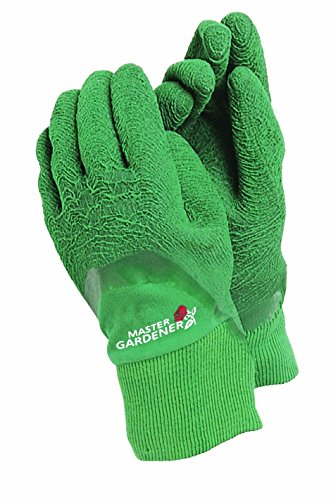
1. Town & Country Master Gardener: Best All-Rounder
“If you only buy one pair of garden gloves, make it these.” The Master Gardener combines affordability with practical functionality. A nitrile-coated stretchy knit gives reliable wet and dry grip while keeping the back of the hand breathable. Versatile for weeding, planting and general digging, it comes in sensible size ranges and is machine washable.
Key specs: Nitrile-coated palm, stretch knit back, machine washable, multiple sizes.
Pros: – Excellent value – Comfortable – Good grip wet or dry – Proper size range – Washable
Cons: – Coating wears through with heavy use – Limited thorn protection
Best for: Everyday weeding, planting and general garden jobs on a budget.
2. Showa 370 Floreo: Best for Dexterity
“When you are pricking out seedlings, sowing fine seed or doing anything fiddly, you want a glove you can almost forget you are wearing.” This seamless knit with a breathable nitrile palm coating gives exceptional tactile sensitivity. It is featherweight and quick-drying, which suits warm weather, though the thin construction limits durability for rough work.
Key specs: Seamless knit, breathable nitrile palm coating, very lightweight.
Pros: – Outstanding dexterity – Very breathable – Light and quick-drying – Cheap enough to own several pairs
Cons: – Thin, so not for brambles or rough work – Less hard-wearing than leather
Best for: Sowing, potting on, propagation and detailed jobs.

3. Town & Country Master Gardener Lite: Best for Hot Days
A lighter adaptation of the standard Master Gardener, this version keeps the reliable coated-palm grip but uses thinner, more breathable construction for warm-weather comfort. It is unsuitable for frosty mornings or heavy work, but ideal for summer deadheading, weeding and harvesting.
Key specs: Lightweight coated palm, thinner breathable knit.
Pros: – Cool and breathable – Light – Good value – Decent grip
Cons: – Thin for cold or heavy work – Limited thorn protection
Best for: Summer weeding, harvesting and light jobs in warm weather.
4. Showa 477: Best for Cold and Wet
“British gardening means a lot of damp, chilly days, and the Showa 477 is built squarely for them.” Its foam-insulated, fully coated construction resists cold and moisture during winter digging, leaf clearing and bare-root planting. The waterproof coating gives adequate grip on wet tools, at the cost of summer suitability and precision.
Key specs: Fully coated nitrile, foam-insulated, waterproof.
Pros: – Warm – Waterproof – Good grip on wet tools – Affordable for an insulated glove
Cons: – Too warm for summer – Bulkier than thin coated gloves, so less precise
Best for: Winter digging, leaf clearing and wet-weather jobs.

5. Gold Leaf Winter Touch: Best Premium Winter Glove
Gold Leaf’s cold-weather flagship uses soft deerskin that moulds to the hand, with a warm interior lining. The water-resistant hide stays supple after wetting, unlike cheaper alternatives, and the range carries Royal Horticultural Society endorsement. The premium price is justified by longevity and comfort over budget options.
Key specs: Deerskin leather, warm lining, water-resistant, RHS-endorsed range.
Pros: – Warm – Supple deerskin – Water-resistant – Excellent dexterity for a leather glove – Long-lasting
Cons: – Expensive – Like all leather, needs occasional care and should not be machine washed
Best for: Gardeners who want one quality leather glove for cold-weather work.

6. Gold Leaf Tough Touch: Best for Thorny Pruning
“When the job is pruning roses, cutting back pyracantha or clearing brambles, thin coated gloves simply will not do.” Thicker deerskin construction gives genuine thorn resistance in the palms and fingers while keeping enough sensitivity for secateurs and loppers. The hide softens with use rather than becoming rigid.
Key specs: Thick deerskin leather, thorn-resistant palm and fingers.
Pros: – Genuinely thorn-resistant – Durable deerskin – Good control for pruning – Comfortable
Cons: – Premium price – No forearm protection (consider a gauntlet for big roses)
Best for: Pruning roses and thorny shrubs, handling prickly prunings.


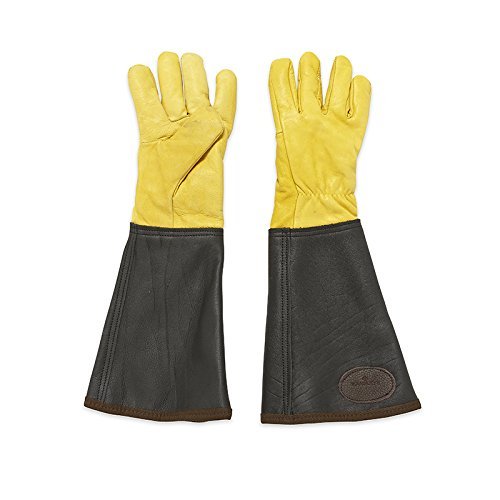
7. Bradleys Anti-Bramble Gauntlet: Best Gauntlet for Roses
“For the most savage jobs there is the gauntlet, and Bradleys, a long-established British tannery, makes a particularly good one.” The full-length saddle-hide cuff protects forearms almost to the elbow for reaching into thorny climbers. Handmade thick leather means years of durability, at the cost of fine dexterity and premium pricing.
Key specs: Thick British saddle hide, long forearm cuff, handmade.
Pros: – Full forearm protection – Very tough handmade British leather – Should last for years
Cons: – Expensive – Bulky and not for delicate work – Takes time to break in
Best for: Pruning big or rambling roses, clearing brambles and tackling overgrown areas.
How to Choose Garden Gloves
Match the Glove to the Job
Light coated gloves excel at weeding and planting thanks to superior tactile feedback. Leather and gauntlets provide essential thorn protection for pruning. “Most keen gardeners end up owning two pairs: a cheap, breathable everyday pair and a tougher leather pair for the rough stuff.”
Get the Fit Right
A properly fitted glove should feel like “a slightly loose second skin.” Too tight causes cramping and sweaty hands; too loose reduces dexterity. Women particularly benefit from brands offering genuine size ranges rather than generic sizing.
Think About Breathability and Waterproofing
Nitrile or latex-coated gloves balance moisture protection with breathable backs, ideal for damp British conditions. “There is always a trade-off between staying dry and staying cool, so it helps to have a lighter pair for warm days and a warmer, more weatherproof pair for the cold months.”
Don’t Overlook Durability
Reinforced fingertips, double-stitched seams and supple leather indicate longevity. “A £25 pair of leather gloves that lasts five seasons works out far cheaper than replacing a £6 pair every couple of months.”
Caring for Your Garden Gloves
Remove dried mud before it sets and air-dry damp gloves away from direct heat, as radiators cause leather to harden and crack. Coated fabric gloves tolerate a cool machine wash, extending their life. Leather gloves benefit from occasional conditioner to keep them supple and water-resistant. Store all gloves somewhere dry rather than leaving them exposed to shed damp.
Which Garden Gloves Should You Buy?
“For most people, the honest answer is two pairs.” Start with a budget all-rounder like the Town & Country Master Gardener for routine weeding, planting and tidying, then add a specialist pair for jobs needing more protection. Anyone doing propagation will appreciate the precision of the Showa 370 Floreo, while winter gardeners will value the Showa 477. “Spend more only where it earns its keep.” Quality leather gloves such as the Gold Leaf pairs reward frequent users with durability and comfort, and the Bradleys gauntlet justifies its cost for anyone growing roses or clearing brambles.
Frequently Asked Questions
What Are the Best Gloves for Pruning Roses?
“Leather is the only material that reliably keeps thorns out.” The Gold Leaf Tough Touch protects hands effectively, while the Bradleys Anti-Bramble gauntlet extends protection to the forearms for climbing and rambling varieties.
Are Coated Fabric Gloves or Leather Gloves Better?
“Neither is better outright; they suit different jobs.” Coated gloves offer affordability, breathability and everyday practicality. Leather provides superior durability, warmth and thorn resistance for specialist tasks. Most gardeners benefit from owning both types.
How Do I Stop My Hands Getting Sweaty in Garden Gloves?
Choose gloves with breathable, uncoated backs rather than fully waterproof designs, and pick lighter pairs for warm conditions. “The Showa 370 and Town & Country Master Gardener Lite are both good options for keeping hands cool on hot days.”
How Long Should a Pair of Garden Gloves Last?
“It depends entirely on use and material. Budget coated gloves used hard might last a season or two, while a well-cared-for pair of quality leather gloves can last five years or more.” Reinforced fingertips and double-stitched seams signal extended durability.