There is a quiet job that most of us put off until it becomes a problem: cleaning out the gutters. It is easy to ignore because you cannot see the mess from ground level, but blocked gutters are one of the most common causes of damp walls, overflowing downpipes and stained brickwork. Come autumn, when the leaves start dropping in earnest, a summer’s worth of moss, grit and seed heads turns into a soggy dam that stops your gutters doing their one job.
The good news is that you no longer need to balance halfway up a wobbly ladder to sort it out. A whole category of gutter cleaning tools now lets you do the work with both feet planted firmly on the ground. In this guide we run through the best gutter cleaning tools you can buy in the UK for 2026, from a £6 scoop to a proper pressure washer kit, and help you work out which type suits your house, your budget and your gutters.
Late summer and early autumn is the ideal time to buy and get set up, before the big leaf fall arrives. Clear your gutters once in early autumn and again after the last leaves have come down, and you will save yourself a lot of grief over winter.
What to look for in a gutter cleaning tool
Not every tool suits every house, so it pays to think about a few things before you buy.
Reach is the big one. A standard UK bungalow or single-storey extension has gutters around 2.5 to 3 metres up, which most telescopic tools can reach comfortably from the ground. A typical two-storey house puts the gutter line at roughly 5 to 6 metres, which is beyond the safe reach of many budget poles. Be honest about how high your gutters really are, because a tool that leaves you stretching off a ladder defeats the whole point.
Safety should drive the decision. Falls from ladders are one of the most common causes of serious DIY injury in the UK, and gutters are the classic culprit. Anything that keeps you off a ladder, or at least keeps both hands free and your weight over the rungs, is worth paying for. If your gutters are high and you are not confident, there is no shame in calling in a professional.
Gutter type matters too. Most UK homes have half-round or ogee (squared) plastic guttering, and the curved heads on scoops and scrapers are shaped to match a half-round profile. Older properties may have cast iron gutters that are heavier and rougher, where a sturdier scraper earns its keep.
Finally, think about what you are clearing. Dry leaves and loose debris are easy to lift out or blow clear. Wet, compacted silt and moss is a different beast and usually needs a scoop, a grabber or the flushing power of water.
Best gutter cleaning tools UK 2026 at a glance
| Tool | Best for | Power source | Typical price |
| Half-round gutter scoop | Budget spot-clearing on a ladder | Manual | Around £6-£12 |
| Kingfisher telescopic gutter cleaner | Ground-level clearing of single-storey gutters | Manual / water-fed | Around £15-£20 |
| Gutter grabber tongs | Lifting out wet leaves and silt | Manual | Around £30-£45 |
| Wet & dry vacuum gutter kit | Sucking out debris on a two-storey home | Mains vacuum | Around £25-£45 (plus vac) |
| Leaf blower gutter attachment | Blowing dry debris clear quickly | Cordless / petrol blower | Around £15-£30 (plus blower) |
| Karcher roof gutter & pipe kit | Flushing gutters and downpipes with water | Pressure washer | Around £60-£70 (plus washer) |
| Professional gutter vacuum system | Very high gutters, large jobs | Powered vacuum | £hundreds |
Prices move around, so treat these as a guide rather than gospel. Below we go through each option in more detail so you can match the tool to your home.
The best gutter cleaning tools reviewed
1. Half-round gutter scoop — the budget starting point
If you only need to clear the odd blockage and you are comfortable on a ladder, a simple half-round gutter scoop is the cheapest way in. These are lightweight plastic tools with a curved tip shaped to slide along the bottom of a half-round gutter, scooping out leaves and silt as you go. Screwfix and Toolstation sell their own versions for around £6, and most take a universal thread so you can screw them onto a telescopic pole if you want a bit more reach.
It is not glamorous and it will not keep you off the ladder on its own, but for a one-storey home or an occasional touch-up it does the job for the price of a coffee and a sandwich. Just work methodically along the run and drop the debris into a bucket rather than letting it fall down the wall.
Pros: extremely cheap, light, fits most poles, no power needed. Cons: still means climbing for most homes, flimsier than metal tools, no reach on its own.
2. Kingfisher telescopic gutter cleaner — best budget ground-level tool
This is the tool most people picture when they think of cleaning gutters from the ground. The Kingfisher telescopic gutter cleaner uses a lightweight aluminium pole that extends from about 1.17m up to 1.85m, with a bent head that rotates a full 360 degrees so you can angle it into the gutter and drag debris towards you. It also has a snap-fit hose connector, so you can run water through it to flush the gutter as you work.
At around £15 to £20 it is superb value and ideal for bungalows, single-storey extensions and conservatories. Paired with a longer extension pole it will stretch a bit further, though for a full two-storey house you will reach the limits of what is sensible. It is best on dry to slightly damp debris; really claggy silt can be stubborn to shift with the head alone, which is where the water feed helps.
Pros: genuinely lets you work from the ground, rotating head, water-fed option, brilliant value. Cons: reach tops out for two-storey homes, plastic head is not the most rugged.
3. Gutter grabber tongs — best for wet leaves and silt
Grabber-style tools, sometimes sold under names like Gutter Sense, work like a giant pair of tongs on the end of a pole. You control the paddles from the ground with a cord or lever, close them around a handful of wet leaves or silt, and lift the lot out cleanly. Because you are grabbing and removing rather than dragging, you keep the mess out of the downpipe and off the wall.
Expect to pay around £30 to £45 for a decent set, and check what pole it fits, as some are sold as the head only. They are the best manual answer for the wet, compacted gunk that a scoop just smears around, and they come into their own in autumn when the gutters are full of soggy leaf mould. The trade-off is that they are slower than blowing or flushing, and grabbing at full stretch takes a bit of practice.
Pros: lifts wet debris out cleanly, keeps downpipes clear, no power needed. Cons: pricier than a scoop, slower going, pole sometimes sold separately.
4. Wet & dry vacuum gutter kit — best for two-storey homes
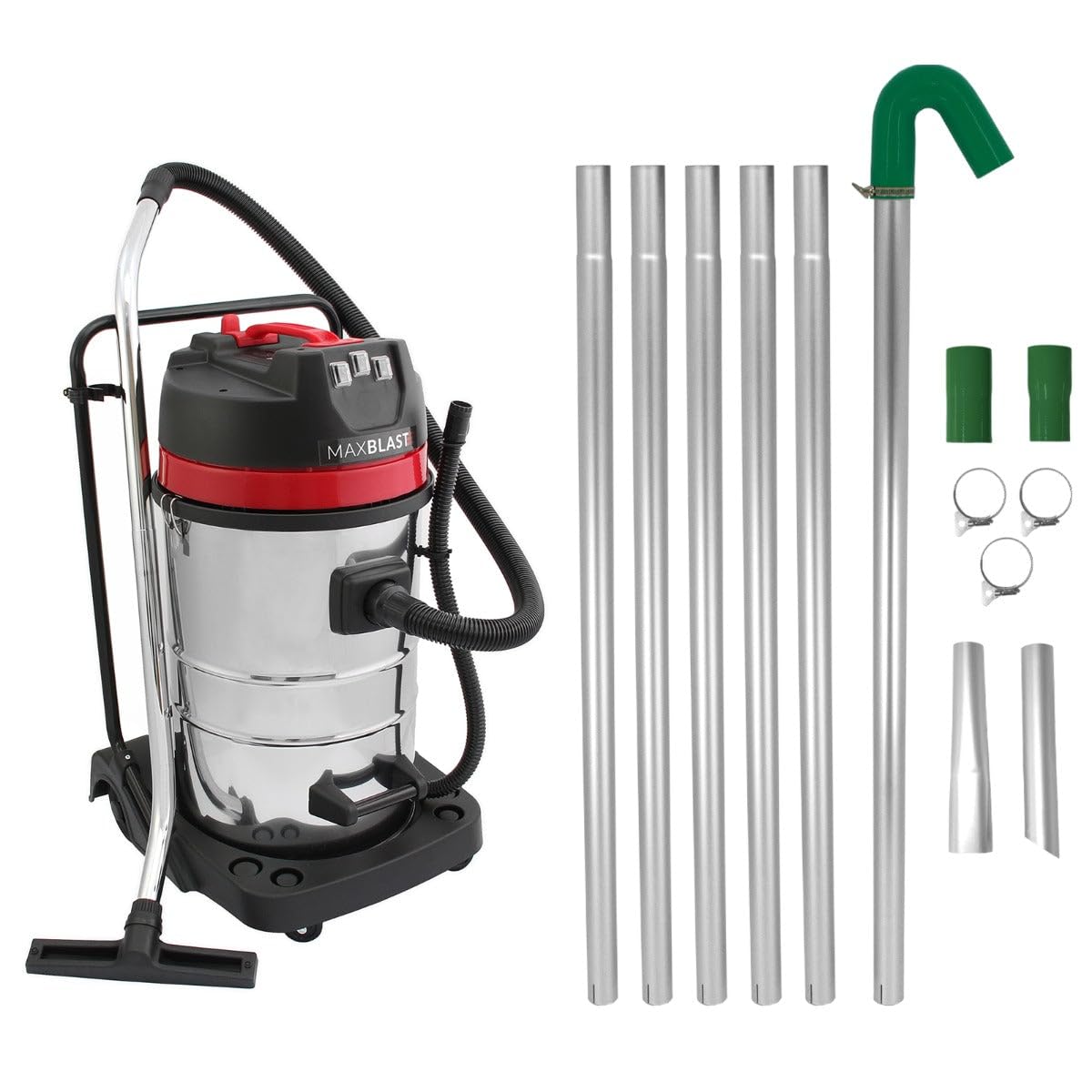
If you already own a wet and dry vacuum, a gutter cleaning attachment kit is one of the most effective upgrades you can make. These kits use a set of curved, telescopic tubes that clip onto the vacuum hose and hook over the gutter, letting you suck out leaves, silt and standing water from ground level. Better kits reach up to around 3 to 4 metres, which covers many two-storey homes.
A kit typically costs £25 to £45 on its own, and you will need a reasonably powerful wet and dry vac to shift wet debris rather than just rattling it around. The clear advantage is that everything ends up in the vacuum drum instead of on your patio, so clean-up afterwards is minimal. The downsides are the weight of the tubes at full extension and the trailing power lead, so plan your access to sockets.
Pros: removes debris completely, good reach, tidy clean-up. Cons: needs a capable wet and dry vac, tubes get heavy at full height, mains lead to manage.
5. Leaf blower gutter attachment — fastest for dry debris
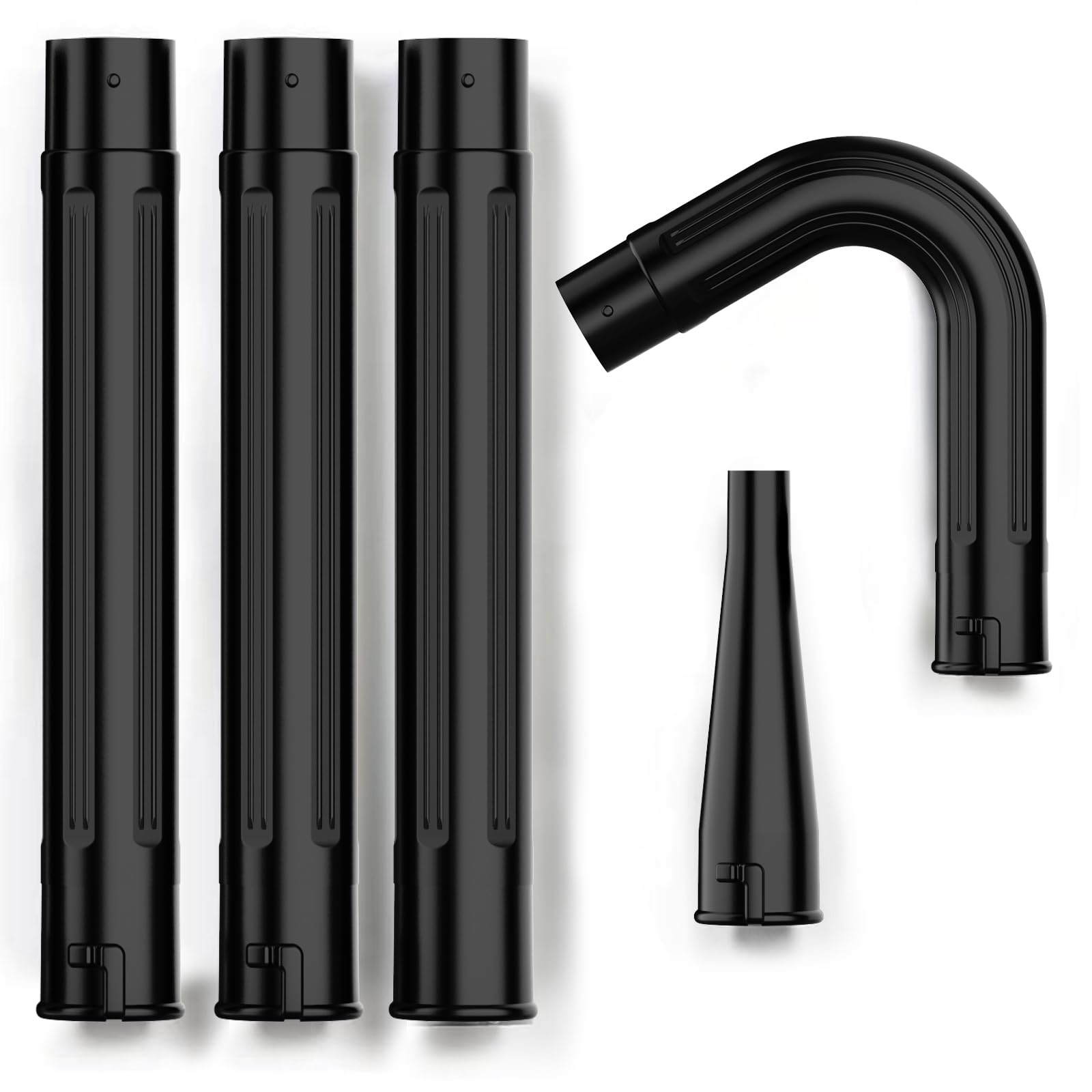
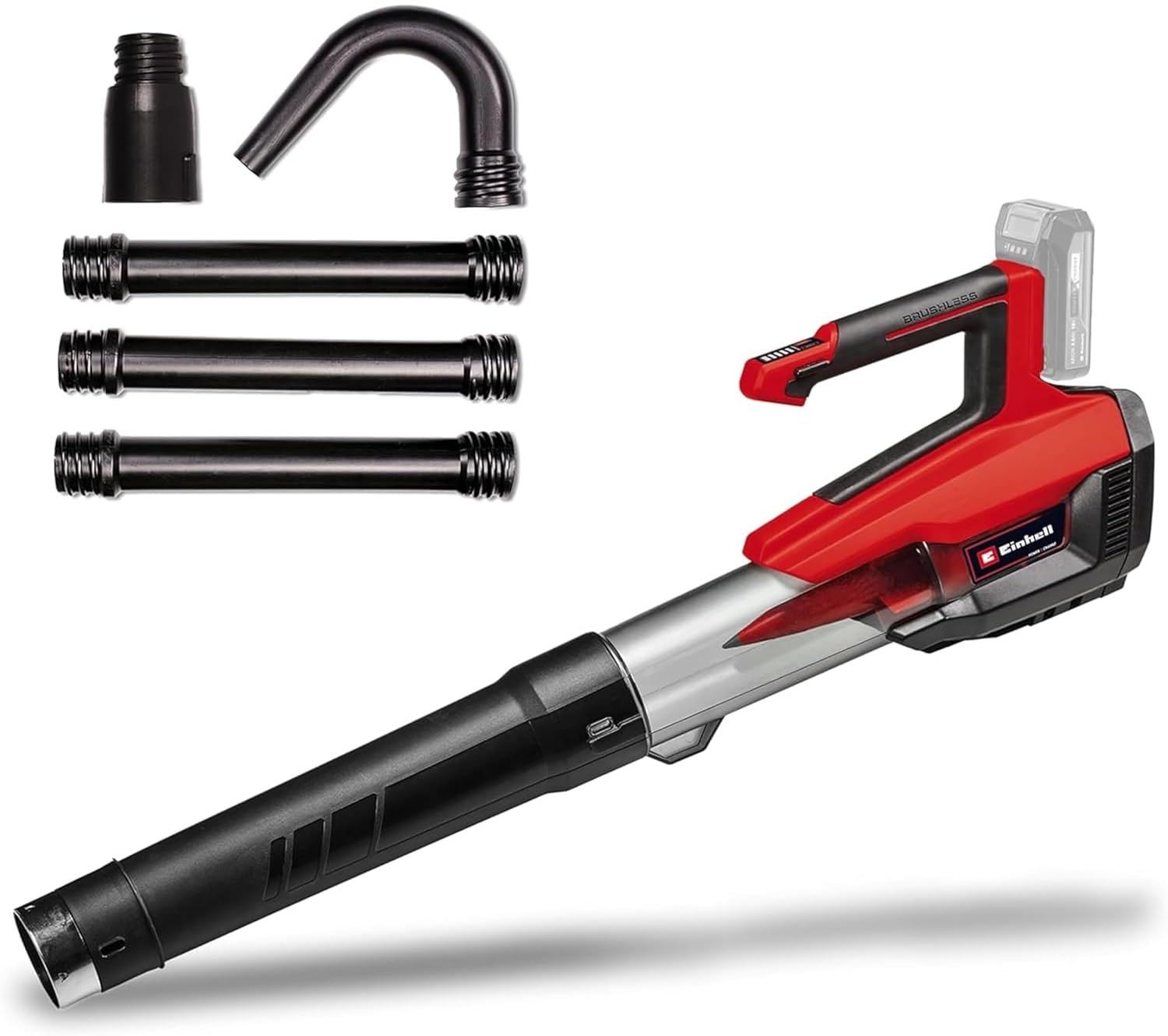
Many cordless and petrol leaf blowers can take a gutter cleaning attachment: a set of curved tubes that channel the airflow up into the gutter so you can blast dry leaves and debris clear from the ground. If you have already invested in a good blower, this is a quick and cheap add-on at around £15 to £30, and it makes short work of a dry autumn gutter in minutes.
The catch is in that word dry. Blowing works brilliantly on loose leaves and dust, but it does very little to wet, packed-down silt, and it can fling debris around, so eye protection and a bit of common sense are essential. Check the attachment is compatible with your blower before buying, as fittings vary between brands. For a fuller round-up of blowers themselves, see our guide to the best leaf blowers.
Pros: very fast on dry debris, cheap if you own a blower, no ladder. Cons: useless on wet silt, messy, compatibility varies by brand.
6. Karcher roof gutter and pipe cleaning set — best for a deep flush
For anyone who already owns a Karcher pressure washer, the Karcher roof gutter and pipe cleaning set is a clever bit of kit. It fits the K2 to K7 range and comes with a 20-metre hose and two nozzles: one that drives a sled along the gutter on high-pressure jets, and one for blasting through blocked downpipes. Rather than you doing the scrubbing, the water pressure does the work and clears out compacted silt and moss that hand tools struggle with.
At around £60 to £70 for the kit it is the priciest option here, and of course you need a compatible pressure washer to begin with. It is overkill for a quick tidy-up, but if your gutters and downpipes get genuinely blocked, it clears them thoroughly. Expect to get wet and to send a fair amount of debris and dirty water out of the downpipe, so clear the area below first. If you are still choosing a pressure washer, our pressure washer reviews and our Karcher versus Nilfisk comparison are good starting points.
Pros: powerful flush for blocked gutters and downpipes, long hose, tackles compacted silt. Cons: expensive, needs a pressure washer, messy and wet to use.
7. Professional gutter vacuum system — for very high or big jobs
At the top end sit powered gutter vacuum systems such as those from SkyVac and similar brands. These use a high-powered vacuum with rigid carbon or aluminium poles that can reach 9 metres or more, letting you clear the gutters on a three-storey house from the safety of the ground. They are what most professional gutter cleaners use.
For a homeowner they are usually more than you need, running into the hundreds of pounds, but if you have an unusually tall property, a lot of gutters to manage, or you are kitting out a cleaning round, they are in a different league for reach and power. For most households, though, one of the cheaper tools above will do the job perfectly well.
Pros: huge reach, powerful, professional results. Cons: expensive, bulky to store, overkill for the average home.
Which gutter cleaning tool should you buy?
For a bungalow, single-storey extension or conservatory, the Kingfisher telescopic gutter cleaner is the obvious first buy: cheap, effective and genuinely usable from the ground. Add a set of grabber tongs if your gutters fill with wet leaf mould each autumn.
For a standard two-storey house, a wet and dry vacuum gutter kit gives you the best mix of reach, cleanliness and value, especially if you already own the vac. If your gutters tend to block solid rather than just gather leaves, the Karcher pressure washer kit will clear them more thoroughly.
If you already own a leaf blower and your problem is mostly dry leaves, the blower gutter attachment is the fastest and cheapest fix of all. And if your house is tall or you simply would rather not deal with it, a professional gutter vacuum, or a professional gutter cleaner, is money well spent.
How to keep on top of your gutters
Twice a year is the sensible rhythm for most UK homes. Do the main clear-out in autumn once the bulk of the leaves have dropped, usually from late October into November, and give them a quick check in spring to remove any moss and blossom that has built up over winter. Homes surrounded by trees may need a look in mid-autumn as well, before the gutters fully clog.
Whatever tool you use, work from the downpipe outwards so you are not pushing debris towards the outlet and blocking it. Check that water actually runs away down the downpipe when you have finished; a gutter that looks clear but still will not drain usually has a blockage lower down. And always keep away from overhead power lines when working with long poles.
If clearing the gutters is a job you dread, it is worth fitting gutter brushes or mesh guards afterwards. They will not stop everything, but they cut down how often you need to get the tools out, which for most of us is the whole point. Clearing leaves is part of a bigger autumn to-do list, and our guide to getting your garden ready for autumn covers the rest.
Frequently asked questions
How often should I clean my gutters?
Twice a year suits most homes: a thorough clear in autumn after the leaves fall, and a quick check in spring. If you have a lot of overhanging trees, add a mid-autumn clear so the gutters do not clog before you get to them.
Can I really clean gutters without a ladder?
For single and many two-storey homes, yes. Telescopic tools, vacuum kits and pressure washer attachments are all designed to be used from the ground. Very high or three-storey gutters may still need a professional with a powered vacuum system.
Do gutter cleaning brushes and guards work?
They help, but they are not magic. Brushes and mesh guards keep out the worst of the leaves and slow down how quickly gutters fill, but fine silt and moss still get through, so you will still need an occasional clear-out.
What is the best tool for wet, compacted leaves?
Grabber tongs or a wet and dry vacuum kit deal with soggy debris best, because they lift it out rather than smearing it around. For truly compacted silt, a pressure washer kit will flush it clear.
Final thoughts
Cleaning gutters will never be anyone’s favourite garden job, but the right tool turns it from a nerve-racking afternoon up a ladder into a quick, safe task you can do from the ground. For most people, a telescopic gutter cleaner or a wet and dry vacuum kit is all they will ever need, with a pressure washer kit in reserve for the stubborn blockages.
Buy your kit now, before the leaves come down in force, and get one clear done early in the season. Your walls, your downpipes and your future self will thank you when the autumn rain arrives.