Hard soil, puddles after rain and pale, tired growth all point to the same culprit: compacted soil. Aeration is an affordable fix that needs nothing more than a fork or a simple manual aerator. This guide covers when to aerate in the UK, the types of aerator, the kit that suits your budget, and clear step-by-step instructions.
What Lawn Aeration Actually Does
Aeration means making holes in the soil so air, water and nutrients reach the grass roots. Foot traffic, mowers and garden furniture compact soil over time. That causes water run-off, shallow roots that scorch in summer, and oxygen starvation that stops thatch breaking down and encourages moss.
Signs Your Lawn Needs Aerating
- Puddles or slow drainage still there ten minutes after heavy rain
- Hard, dry patches where a screwdriver won’t push in 10cm easily
- Persistent moss despite treatment
- Thinning grass in high-traffic areas
- Yellow or pale growth despite feeding
When to Aerate a Lawn in the UK
Autumn Is the Prime Window
Late September to mid-November is best. The soil is still warm from summer, autumn rain has softened it so tines go in easily, and the grass is in its second growth flush so it recovers quickly. It pairs well with scarifying, top-dressing and overseeding. Finish before the first hard frost to avoid surface heaving and root damage.
Spring Is the Backup
Mid-March to late April works if you missed autumn, once growth has restarted and the ground is no longer waterlogged. It suits solid-tine aeration to tackle summer drainage problems.
Avoid aerating in mid-summer drought, and avoid sodden, soft winter ground.
The Three Types of Aeration (and Which You Need)
Spike (Solid Tine) Aerators
These push solid spikes 5 to 10cm into the lawn using rolling drums, fork-style stamping heads or wheeled push tools, with no soil removed. They are quick and cheap, and fine for light maintenance on sandy soils. On heavy clay, solid spikes just compact the soil sideways around each hole, so the benefit is short-lived.
Best for: Small to medium lawns on sandy or loamy soil needing light annual maintenance. Budget: £20 to £60 manual, £100+ petrol.
Hollow Tine (Plug) Aerators
The gold standard. Hollow tines pull out cylinders of soil (cores or plugs), typically 7 to 10cm deep, leaving genuinely empty channels. Removing soil rather than displacing it is what relieves compaction. It is slower and harder work than spiking (a manual tool on a 50m² lawn takes a full afternoon), but it is the only method that meaningfully decompacts clay. Rake the cores away, or break them up and brush them back in with sharp sand and top dressing.
Best for: Clay soils, compacted lawns and annual autumn renovation. Budget: £25 to £60 manual, £150+ powered.
Slitting (Knife) Aerators
Rare in domestic gardens, these use thin blades to cut narrow slots. They suit fine turf and bowling-green-quality lawns where surface disturbance must be minimal. Most UK gardeners are better served by spike or hollow tine methods.
The Kit You Actually Need
If You Already Own a Garden Fork (£0)
A standard digging fork handles lawns under about 30m². Push the tines in to full depth every 10 to 15cm, rock the handle gently to widen the holes, and pull straight out. It is slow and physical, but effective.
Manual Aerator (£20 to £50)
For small to medium lawns a manual aerator is the best value. A foot-press hollow tine tool is the cheapest genuine core-pulling option. Rolling spike drums cover ground faster but use spikes rather than hollow tines. If you have clay, prioritise the hollow tine tool. If you have sandy or loamy soil and a larger lawn, a rolling drum is the better fit.
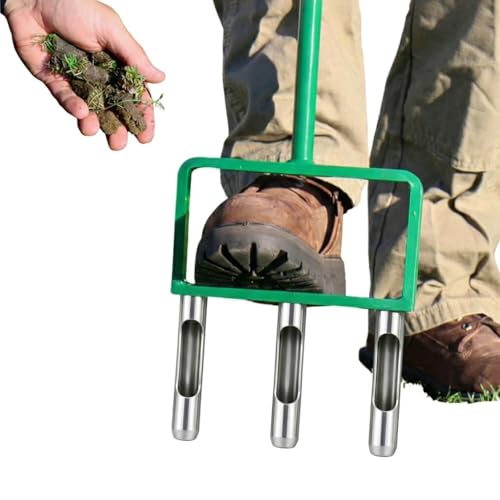
Tool we’d use for clay: Landzie Hollow Tine Lawn Aerator (42 inch)
A long-handled, foot-press hollow tine tool in stainless steel with replaceable coring tines. It pulls proper plugs, which is what compacted clay needs, and suits small to medium lawns.
Key specs: Manual hollow tine (core) aerator, 42 inch handle, stainless steel, replaceable tines. See card for current price.
Powered/Electric Aerator (£100 to £250)
Once a lawn passes roughly 150m², manual aeration becomes hard going. Mains or cordless aerator/scarifier combination machines from brands such as Bosch, Einhell, Greenworks and Wolf Garten cover ground faster with interchangeable cassettes. They use spikes rather than hollow tines, but suit most domestic lawns and save a lot of effort.
Petrol or Contractor-Grade (£300+)
Very large lawns, heavy clay or paddocks eventually call for a proper petrol aerator with hollow tines and weighted drums. For a typical garden, a contractor’s annual hollow tine pass often costs less than buying the machine.
Step-by-Step: How to Aerate Your Lawn
1. Time It Right
Pick a day when the soil is moist but not waterlogged, ideally one or two days after good rain. If the ground is hard and dry, water well 24 hours beforehand, as tines won’t penetrate baked soil. Avoid frosty mornings.
2. Mow First, But Not Too Short
Cut the day before, to about 25 to 30mm. Shorter stresses grass that is about to be perforated. Longer grass stops the tines reaching the soil.
3. Scarify if Needed
If there is thick thatch or heavy moss, scarify before aerating. Aerating through thatch just plugs the holes back up.
4. Mark Out the Lawn
Divide the lawn into strips about one tool-width wide. Working systematically stops you missing patches or aerating twice.
5. Aerate
Spacing matters more than depth. Aim for holes every 10 to 15cm. Closer is unnecessary, and wider defeats the purpose. With a hollow tine fork, stamp in, lift straight out, step once and repeat. With rollers, move slowly enough to see clean holes behind you. Reach at least 7cm depth, ideally 10cm. If the tool won’t go deeper the soil is too dry or compacted: water and come back tomorrow, or spike first to break the surface before hollow tining.
6. Deal with the Cores (Hollow Tine Only)
Hollow tining leaves small sausage-shaped plugs across the lawn. Either run a rotary mower over the dry cores so the broken pieces filter back into the grass, or rake them off and bin them, then brush in sharp sand or sandy top dressing to fill the holes.
7. Top-Dress (Optional But Worth It)
Brush a thin layer of top dressing, typically 70% sharp sand and 30% sieved loam or compost, into the fresh holes. It is the single biggest upgrade for a clay lawn. Use a stiff broom or the back of a rake to work it into the channels. Three years of annual top-dressing genuinely changes lawn structure.
8. Overseed and Feed
Open holes give seed excellent soil contact. Autumn aeration with overseeding and a balanced autumn feed is the textbook UK renovation.
9. Water In and Stay Off
If the weather is dry, give the lawn a good soaking afterwards. Stay off it for about a week while new roots explore the holes, and don’t mow for 5 to 7 days so the surface can settle.
Aerating Different Soil Types
Clay soils: Compact quickly, hold water and starve roots of oxygen. Autumn hollow tine aeration is essential, with sharp sand top-dressing every year. Very heavy clay benefits from twice-yearly aeration: spring spike and autumn hollow tine.
Sandy soils: Already drain well, so the focus is root depth and summer drought. An annual spike aeration, ideally in spring, usually suffices. Pair it with loam-based top dressing to help hold moisture.
Loamy soils: Ideal for lawns. An annual spike or autumn hollow tine pass keeps them in good shape, and extra aeration adds little.
Common Mistakes to Avoid
- Aerating in drought, when tines bounce off hard soil and tear the lawn
- Aerating in mid-summer, stressing grass that is already struggling
- Going too shallow: 3cm holes achieve little, so aim for 7 to 10cm
- Aerating through thick thatch (scarify first)
- Skipping top-dressing on clay, so the holes close within weeks
- Expecting instant miracles: a neglected clay lawn typically needs three consecutive autumns of aeration and top-dressing before the difference is obvious
How Often Should You Aerate?
- Loamy soil, light use: Once every two years
- Average UK lawn, family use: Once a year in autumn
- Clay soil or high-traffic lawn: Twice a year, spring spike and autumn hollow tine
- New lawns (under two years old): Wait until year three so roots can establish
Conclusion
Aeration is the unglamorous backbone of UK lawn care. It is less satisfying than mowing stripes, but feeds, seed and watering only work properly in soil with enough air, drainage and root space. Start small: hollow tine the worst patch of lawn this autumn, top-dress and overseed it, and see the improvement in spring before tackling the whole lawn.