Proper mowing timing significantly impacts lawn health. This guide covers the complete UK mowing year with seasonal guidance on when to start, cutting frequency, blade heights, and strategies for unpredictable British weather.
When Does the Mowing Season Start in the UK?
Mowing typically begins when soil temperatures consistently exceed 7°C (44°F) and grass shows visible growth. This usually occurs from mid-March to early April in England and Wales, with Scotland and Northern Ireland waiting until late March or April.
The Royal Horticultural Society recommends observing grass growth rather than calendar dates: if the lawn has clearly put on a centimetre or two of growth since your last cut (or since winter), it’s time to get the mower out.
The UK Lawn Mowing Calendar at a Glance
|
Season |
Months |
Frequency |
Height |
Key Tips |
|
Spring |
March–May |
Every 1–2 weeks |
4–5 cm |
First cut high; rake dead grass |
|
Summer |
June–August |
Weekly or fortnightly in drought |
2.5–3.5 cm |
Never cut wet or stressed grass |
|
Autumn |
September–November |
Every 2–3 weeks |
4–5 cm |
Raise height as temps drop |
|
Winter |
December–February |
Rarely/mild only |
5 cm+ |
Avoid frozen or waterlogged grass |
Spring (March to May): Waking the Lawn Up
Spring requires restraint. The first annual cut should be around 5 cm (2 inches) to remove winter growth without damaging soft, cold grass. March typically requires one or two cuts; April moves to weekly cutting as daylight lengthens.
Spring maintenance tasks include:
- Light scarification to remove moss and dead grass
- Applying spring lawn feed
- Inspecting mower blades for sharpness
- Aerating compacted winter soil
Avoid mowing when ground is frozen or waterlogged, as this compacts soil and damages grass crowns.
Summer (June to August): The Main Growing Season
Summer demands the most frequent mowing. Grass grows fastest during June and July, often requiring weekly cuts or more in wet conditions.
Ideal summer cutting height ranges from 25–35 mm (approximately 1–1.5 inches) for standard lawns. Decorative or fine lawns can go shorter at 13–25 mm but require more frequent cutting.
Never remove more than one-third of the grass height in a single cut. This one-third rule prevents stress when lawns have grown excessively.
During dry spells, raise cutting height slightly and reduce frequency. Drought-stressed grass cut too short browns rapidly and recovers poorly.
Summer tips include:
- Mow during morning or evening hours
- Consider grasscycling (leaving clippings) during dry periods
- Maintain sharp blades throughout the season
- Monitor for pest damage
Autumn (September to November): Slowing Down Gradually
Growth slows noticeably from September. Cutting frequency transitions from weekly to fortnightly through September-October, with most lawns needing only one or two cuts by November.
Raising cutting height to 4–5 cm protects winter hardiness by preserving leaf material for photosynthesis and reducing frost damage risk.
Autumn renovation opportunities include:
- Scarifying to remove summer thatch build-up
- Overseeding bare patches while soil remains warm
- Applying autumn feed (high potassium, low nitrogen)
- Spiking compacted areas before ground becomes waterlogged
Remove fallen leaves regularly, as thick layers block light and encourage disease development.
Winter (December to February): Mostly Leave It Alone
Most UK gardeners store mowers in November or December. Grass growth near-stops when soil temperatures drop below 5°C.
Mild British winters occasionally produce late-season growth. If grass clearly grows significantly and conditions are dry underfoot, a high cut (5 cm minimum) is acceptable.
Winter mowing rules:
- Never mow frozen or frost-covered grass, as the cells are brittle and easily damaged
- Avoid waterlogged ground to prevent soil compaction and rutting
- Use the highest blade setting for any winter cuts
- Minimise lawn foot traffic during wet, cold periods
Winter provides ideal mower servicing time: cleaning decks, draining old fuel, replacing spark plugs, and sharpening blades for spring readiness.
Month-by-Month Quick Reference
|
Month |
Action |
Month |
Action |
Month |
Action |
|
January |
Usually no |
May |
Weekly |
September |
Fortnightly |
|
February |
Rarely (mild only) |
June |
Weekly |
October |
Every 2–3 weeks |
|
March |
Fortnightly mid-month |
July |
Weekly/fortnightly |
November |
Once if needed |
|
April |
Weekly from mid-month |
August |
Weekly (fortnightly drought) |
December |
No |
How High Should You Cut Your Grass?
Cutting height significantly affects lawn health. Too-short cutting stresses grass, promotes moss, and creates bare patches. Excessive length encourages thatch and disease-prone spongy surfaces.
Recommended heights for typical family lawns:
- Spring first cut: 5 cm (roughly 2 inches)
- Spring ongoing: 4–5 cm
- Early summer: 3–4 cm
- Peak summer (moist): 2.5–3.5 cm
- Summer drought: add 0.5–1 cm
- Autumn: 4–5 cm
- Winter/final autumn cut: 5 cm
Fine ornamental lawns tolerate 10–20 mm cutting but require frequent cutting, quality varieties, and intensive care. Utility lawns for children and pets perform better at 30–40 mm for durability.
Never take off more than one-third of the current grass height in a single mowing session. Gradual height reduction over multiple cuts prevents weakening.
Top Tips for a Healthier, Better-Looking Lawn
1. Mow in Alternate Directions
Varying mowing patterns prevents directional grass leaning, reduces wheel-track soil compaction, and creates stripes with roller mowers.
2. Don’t Mow Wet Grass
Wet grass clumps in the mower deck, produces uneven cuts, and tears rather than slices, leaving grass vulnerable to fungal infection.
3. Keep Your Blade Sharp
A blunt blade tears the grass rather than cutting it, leaving ragged white tips that are visible from a distance and more vulnerable to disease. Sharpen or replace blades at least once a season.
4. Check for Wildlife Before You Mow
Hedgehogs, slow worms, frogs, and nesting birds inhabit longer grass. A brief sweep before mowing, especially in spring and early summer, lets you relocate wildlife.
5. Consider Leaving a Patch for Wildflowers
Unmowed areas from April to August support wildflower blooming and provide pollinator habitat. Many gardeners create “wild patches” cut back in September.
6. Collect or Leave Clippings?
Generally collect clippings, as excessive surface material mats and forms thatch. Exception: during dry spells, grasscycling (leaving short clippings) retains soil moisture and returns nutrients. Only apply this to slightly long grass.
Which Lawnmower Is Right for Your Mowing Schedule?
Mower selection facilitates consistent maintenance:
- Small gardens (to 50 m²): Corded electric or compact cordless models offer lightweight, easy storage for weekly cutting
- Medium gardens (50–250 m²): 40V+ cordless mowers from EGO, Bosch, and Makita provide cable-free flexibility
- Large gardens (250 m²+): Self-propelled petrol mowers or robotic models reduce physical demand and automate weekly routines
- Bowling-green lawns: Cylinder mowers deliver the finest cuts and superior striping for well-maintained lawns
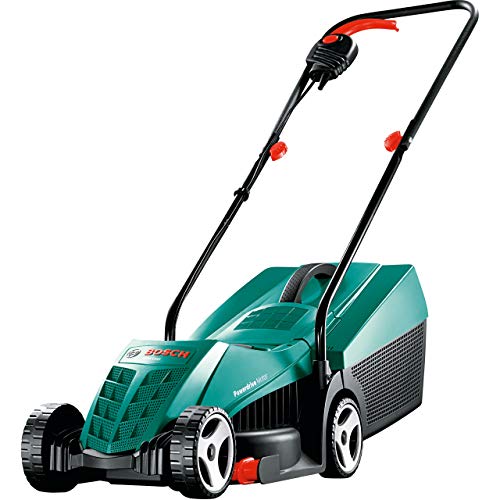
Gear we’d use for a small lawn: Bosch Rotak 32R
For a compact lawn that needs a quick weekly cut, a corded rotary like the Bosch Rotak 32R is easy to store and always ready to go, with no battery to charge before the first cut of spring. It has a grass comb for cutting close to edges. You will need to manage the cable, so it suits small, simple plots best.
Key specs: 32 cm cutting width; 1200W motor; 31-litre grass box; corded electric rotary; see card for current price.
Common Questions About Mowing in the UK
Can I mow in October?
Yes. October remains within the mowing season. Cutting fortnightly at a raised height (4–5 cm) ensures you enter winter with a tidy appearance.
Should I mow before or after it rains?
Before, when possible. Dry grass always cuts better. If wet weather is forecast, mow one or two days prior. After heavy rain, wait until surface water drains and grass dries, typically one or two days.
My lawn went long over a holiday – how do I recover it?
Don’t try to cut it back all at once. Set the mower to its highest setting and take off the top third. Wait three or four days, then cut again slightly lower. Repeat until you’ve brought it back to the desired height. Rushing weakens grass and creates patchy results.
How late in the year can I overseed?
The ideal overseeding window is September and early October, when soil temperatures are still warm enough for germination but the heat of summer has passed. November overseeding risks seed germinating without time to establish before winter.
Final Thoughts
UK mowing requires adapting to weather variability rather than rigid scheduling. Foundational principles include a spring start once growth resumes, regular warm-season cutting without excessive removal, autumn height increases, and winter dormancy.
A well-timed mowing routine, combined with feeding, aerating and occasional scarifying, is the foundation of a healthy lawn. Success doesn’t require extensive hours or expensive equipment, just appropriate timing and modest attention.