A dibber is one of those unassuming little tools that quietly earns its keep every spring. Rather than poking holes with a pencil or your finger, a proper dibber gives you consistent planting depth and less root damage when you are working with seedlings and plugs. This guide covers picks from budget wooden models to stainless steel tools built to last, plus a widger for lifting seedlings gently.
What a dibber actually does (and when you need one)
Dibbers create holes of uniform width and depth for seeds, plug plants, young leeks and small bulbs. The main advantage is consistency: sowing a whole module tray at the same depth gives more even germination and growth.
Two main styles serve different purposes:
- T-handled dibber: better for transplanting established seedlings, leeks, brassicas and small bulbs into beds or containers
- Slim, pencil-style dibber: suited to precise seed sowing in module trays and pricking out tiny seedlings
Many gardeners keep both types, often alongside a widger, a narrow scoop-shaped tool for lifting seedlings without crushing roots.
How we chose
We looked at tools sold by major UK retailers, garden centres and specialist suppliers. We judged build quality, grip comfort, soil-sticking resistance, rust prevention and useful depth markings.
Quick Comparison Table
|
Dibber |
Material |
Best for |
Price |
|
Muldale Beechwood Dibber Set |
Beech wood |
Budget all-round use |
See card for current price |
|
Spear & Jackson Traditional Stainless |
Stainless + hardwood |
Best all-rounder |
See card for current price |
|
Kent & Stowe Stainless Steel Dibber |
Stainless + FSC wood |
Long-term reliability |
See card for current price |
|
Burgon & Ball RHS Stainless Dibber |
Stainless steel |
Premium finish |
See card for current price |
|
Muldale Large Marked Wooden Dibber |
Beech, steel-tipped, marked |
Depth-marked wood |
See card for current price |
|
Berry&Bird Stainless Hand Dibber |
Stainless + wood handle |
Module trays / pricking out |
See card for current price |
|
Kent & Stowe Stainless Widger |
Stainless steel |
Transplanting seedlings |
See card for current price |
Our Top Picks
1. Muldale Beechwood Plant Dibber Set (10cm and 20cm) – best budget buy
A pair of turned beech dibbers, a short one and a long one, made in England. It is the classic allotment choice: simple, warm in the hand and free of corrosion. Having two lengths covers seed trays and deeper beds.
Key specs: Beech wood; set of two (10cm and 20cm); made in England.
Pros: – Affordable and sustainable – Two sizes in one purchase – Warm handling, no rust
Cons: – Wooden tips need more effort in heavy clay – Needs dry storage to avoid splitting
Best for: Beginners testing whether they will use a dibber regularly.

2. Spear & Jackson 5610DB Traditional Stainless Dibber – best all-rounder
A traditional English-style dibber with a stainless steel point and hardwood T-handle. The stainless tip slides in and sheds soil easily, and the T-handle gives good leverage for planting plugs, leeks and bulbs into beds.
Key specs: Stainless steel point; hardwood T-handle; traditional English style.
Pros: – Durable stainless tip that wipes clean – Comfortable T-handle – Suits a mix of planting jobs
Cons: – Smooth point lacks clear depth graduations – Better for plugs and bulbs than precise seed depth
Best for: Gardeners mixing various planting jobs.
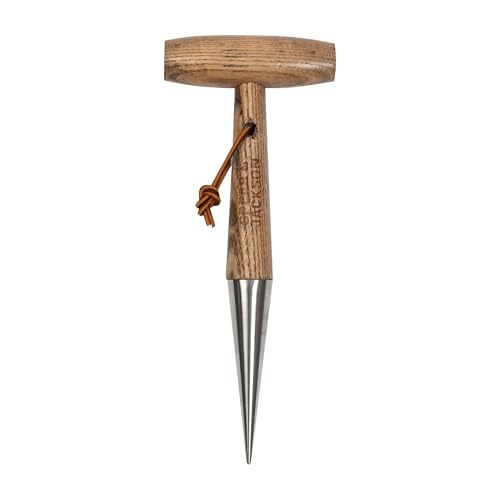

3. Kent & Stowe Stainless Steel Dibber – best for long-term reliability
A stainless steel dibber with an FSC-certified wooden T-handle from a well-known British garden tool brand. Solid construction and a neat finish make it a tool that should last many seasons.
Key specs: Stainless steel head; FSC-certified wood T-handle.
Pros: – Solid build quality – Rust-resistant stainless head – Attractive, durable construction
Cons: – Like most T-handled tools, better as a planting aid than a seed-depth gauge
Best for: Gardeners seeking long-term reliability.

4. Burgon & Ball RHS Stainless Dibber – best premium
British-designed stainless steel dibber with the RHS endorsement. The sharp point needs little effort to push into soil and the finish is a step above budget tools.
Key specs: Stainless steel; RHS-endorsed; Burgon & Ball GTH/SDBRHS.
Pros: – Superb finish quality – Sharp, effective tip – RHS-endorsed range
Cons: – Higher price than wooden options – Smooth tip offers no fine depth markings
Best for: Tool enthusiasts who appreciate heirloom-quality implements.

5. Muldale Large Wooden Dibber with Measurements – best marked wooden dibber
A 20cm beech dibber with a steel tip and measurement markings along the shaft, which makes repeatable depth easy when sowing seeds and planting small bulbs.
Key specs: Beech wood; steel-tipped; up to 20cm; measurement markings.
Pros: – Clearly marked depths – Sustainable wood, comfortable warm feel – Steel tip helps in firmer soil
Cons: – Wood requires dry storage – Costs a little more than plain wooden dibbers
Best for: Seed sowers who prefer wood to metal.

6. Berry&Bird Stainless Steel Hand Dibber – best for module trays and pricking out
A stainless steel hand dibber with a wooden handle, a lighter and more precise tool than the big T-handled models. It is handy for seed trays, cells and tight greenhouse spaces.
Key specs: Stainless steel; wooden handle; hand dibber for seeds and bulbs.
Pros: – Compact and lightweight – Good for seed trays and pricking out – Stainless steel resists rust
Cons: – Too small for larger plugs or deep bulb holes – Complements rather than replaces a T-handled model
Best for: Windowsill and greenhouse seed sowing.

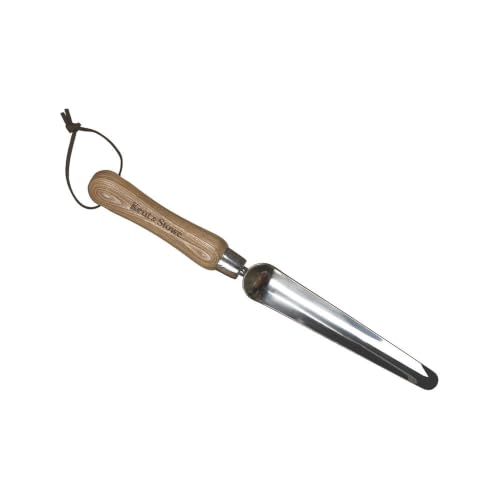
7. Kent & Stowe Stainless Steel Hand Widger – best for transplanting seedlings
A widger is the companion to a dibber: a narrow stainless scoop that slides beneath a seedling so the roots lift out intact rather than being pinched at the stem. Pair it with any dibber above for pricking out.
Key specs: Stainless steel; FSC-certified wooden handle.
Pros: – Reduces transplant losses by lifting roots intact – Stainless steel is easy to clean – Matches the Kent & Stowe dibber
Cons: – Does not make planting holes on its own; needs a dibber – Single tool rather than a set
Best for: High-volume seedling raising.
How to choose the right dibber
Match the tip to the job
Planting leeks, brassicas, plugs and small bulbs calls for wider T-handled models that give roomy holes and leverage. Precise seed sowing and module tray work needs slim, pencil-style designs, ideally with a widger. Owning both styles is an economical investment given how affordable these tools are.
Wood or stainless steel?
Wood is affordable, warm in the hand and sustainable, but it needs dry storage and the tip wears. Stainless steel costs a little more but resists rust, sheds soil and lasts longer, which is why premium options have metal tips.
Look for depth markings
Sowing at the correct depth is one of the biggest factors in even germination. Graduations along the point let you repeat depth accurately. Not all dibbers have markings, so prioritise a marked wooden dibber for seed work.
Comfort matters more than you think
Extended use demands ergonomic consideration. T-handles spread the load well for planting; rounded handles suit repetitive sowing. If grip is an issue, look for shaped handles and sharp tips that need minimal force.
Getting the most from your dibber
Follow seed packet depth instructions for seeds; plant plugs and bulbs at their original growing depth. A traditional leek-planting technique is to drop each leek into a deep hole without backfilling, letting water settle soil around the roots while blanching a longer stem. Clean and dry wooden dibbers after use to prevent splitting, and wipe stainless tips to prevent soil build-up. Store them hanging or in a caddy so they do not get lost.
The verdict
For most UK gardeners, the Spear & Jackson Traditional Stainless Dibber is the sensible all-rounder. Upgrade to the Kent & Stowe for long-term reliability or the Burgon & Ball RHS dibber for a premium finish. Serious seed sowers should add a depth-marked wooden dibber or a slim hand dibber and a widger. Beginners can start with the Muldale beech set to see how much they use a dibber before investing more.
Frequently asked questions
What is a dibber used for?
A dibber makes neat, consistent planting holes for seeds, plug plants, young leeks and small bulbs, so you can plant at an even depth and firm the soil back without damaging roots.
What is the difference between a dibber and a widger?
A dibber makes holes for planting, while a widger is a narrow scoop used to lift individual seedlings from a tray from below, so their roots come up intact when you prick them out.
Are wooden or stainless steel dibbers better?
Both work well. Wooden models cost less, feel warm and are sustainable but need dry storage. Stainless options cost a little more, resist rust, clean easily and last longer, which suits heavier use.
How deep should a dibber hole be?
Follow the depth on the seed packet for seeds, plant plugs and bulbs so they sit at the same depth they were growing, and use a deeper hole for leeks to blanch a longer white stem. Depth-marked dibbers make this easier.