Quality seed trays are a one-time investment that pays back for years. Durability depends mostly on the plastic and how the tray is made, so a slightly dearer tray often works out cheaper than a pack of flimsy throwaways. This guide runs from budget multipacks to self-watering propagators and deep rootrainers, all readily available from UK retailers.
Quick Comparison Table
|
Seed Tray |
Best For |
Type |
Price |
|
Grow It Half Seed Trays (pack of 10) |
Tightest budget / mass sowing |
Thin plastic, half size |
See card for current price |
|
Garland Heavy Duty Standard Seed Tray |
Best all-round value |
2mm recycled, full size |
See card for current price |
|
Garland Professional Seed Trays (pack of 5) |
Regular sowers |
Injection-moulded |
Check retailer |
|
Garland 24 Cell Self-Watering Propagator |
Hands-off watering |
24-cell + reservoir |
See card for current price |
|
Sili-Seedlings Silicone Seed Tray |
Easiest to pop out seedlings |
Flexible silicone |
See card for current price |
|
Garland Professional 40 Cell Insert (5 pack) |
Pricking out / module sowing |
40-cell insert |
See card for current price |
|
Haxnicks Deep Rootrainers (32 cell) |
Deep-rooted crops |
Reusable kit + lid |
See card for current price |
What to Look for in a Seed Tray
Plastic Type and Thickness
Heavy-duty injection-moulded trays in thick polypropylene (often 2mm) with UV stabilisation outlast thin vacuum-formed alternatives by years. They cost more at first but are more economical long term.
Solid Base or Drainage Holes?
There are two standard configurations: trays with drainage holes for direct compost sowing, and watertight solid trays for pot-holding and watering from below.
Full Size, Half Size or Modular
A standard full-size tray measures roughly 37 x 22cm and fits most propagator accessories. Half-size trays suit compact spaces, while modular inserts divide a tray into individual growing cells.
Watering and Warmth
Self-watering systems use capillary matting and a reservoir to keep moisture even. A heat mat or heated propagator adds warmth for temperature-sensitive seeds.
Our Top Picks
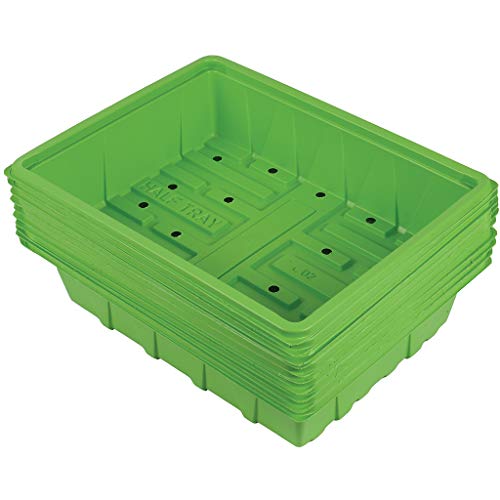
1. Grow It Half Seed Trays (Pack of 10) – Best for the Tightest Budget
Thin black half-size trays sold in a pack of 10. They suit one-off sowing, pot-holding or a windowsill where a full tray will not fit.
Key specs: Half-size trays, pack of 10, thin plastic, no propagator lid
Pros: – Extremely cheap per tray – Widely available – Half size fits crowded windowsills
Cons: – Thin plastic flexes when full – Brittle after a season or two – Not an eco-friendly choice long term
Best for: Single-season sowing or holding pots
2. Garland Heavy Duty Standard Seed Tray – Best All-Round Value
The practical choice for most gardeners. Garland’s heavy-duty tray is 2mm injection-moulded recycled plastic, made in the UK, and lasts many seasons.
Key specs: 2mm injection-moulded recycled plastic, approx. 37 x 22cm, UK-made, available with or without drainage holes
Pros: – Genuinely durable 2mm plastic – UK-made from recycled material – Standard size fits everything – Choice of holes or solid
Cons: – Dearer than throwaway trays – Only worth it if you will reuse them
Best for: General sowing and pot-holding across multiple seasons

3. Garland Professional Seed Trays (Pack of 5) – Best for Regular Sowers
A bundled option for people who sow heavily each spring. Sturdy, stackable, injection-moulded trays with consistent sizing that professionals rely on.
Key specs: Injection-moulded, stackable, professional-standard full-size trays, pack of 5
Pros: – Sturdy and stackable – Good value in a multipack – Long lifespan – Consistent sizing
Cons: – More trays than a casual gardener needs – Plain, no-frills design
Best for: Frequent spring sowing schedules
4. Garland 24 Cell Self-Watering Propagator – Best for Hands-Off Watering
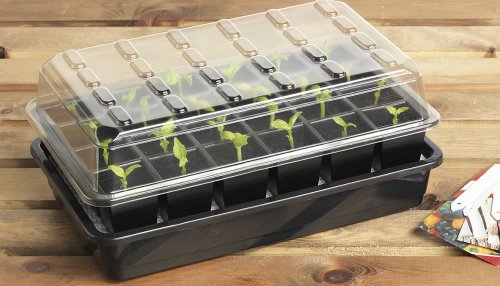
This system takes the guesswork out of watering. A reservoir and capillary matting feed the 24 cells from below, and the clear lid holds humidity for germination.
Key specs: 24 cells, self-watering reservoir with capillary matting, clear lid, unheated (GAL44LSW)
Pros: – Even, reliable moisture – Forgiving for beginners – Clear lid included
Cons: – Not heated – Reservoir needs topping up – More expensive than a plain tray
Best for: Anyone who forgets to water or tends to over-water
5. Sili-Seedlings Silicone Seed Starter Tray – Easiest to Pop Out Seedlings
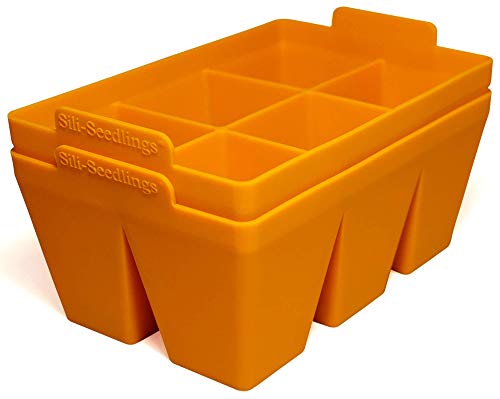
A flexible, reusable option that lets you push seedlings out cleanly with minimal root disturbance.
Key specs: 100% silicone, flexible pop-out cells, dishwasher safe, reusable
Pros: – Seedlings pop out cleanly – Dishwasher safe – Folds flat for storage – Very long-lasting
Cons: – Needs a rigid base to carry – Pricier per cell than plastic
Best for: Minimising root disturbance when transplanting
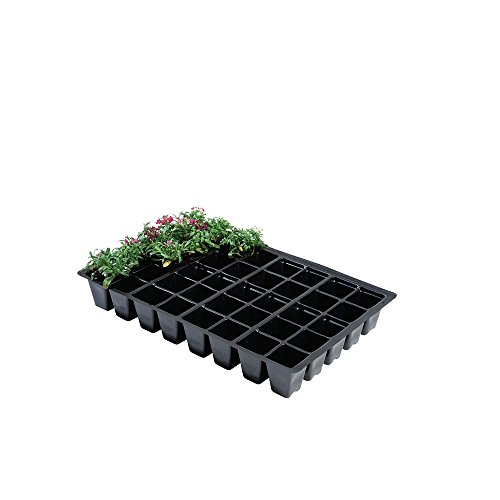
6. Garland Professional 40 Cell Insert (5 Pack) – Best for Pricking Out and Module Sowing
Cell inserts turn a standard tray into a modular set-up, so each seedling grows its own compact root plug and transplants with almost no disturbance.
Key specs: 40-cell inserts, pack of 5, sized for standard full-size trays
Pros: – Cheap per insert – Less root disturbance – Fits standard trays
Cons: – Thin inserts can tear easily – You will want a tray to hold them
Best for: Raising sturdy individual plugs, especially vegetables
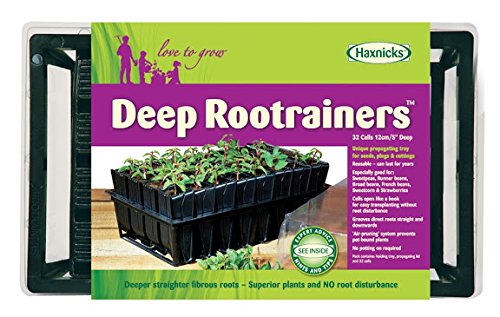
7. Haxnicks Deep Rootrainers (32 Cell) – Premium Pick for Deep-Rooted Crops
A complete reusable kit: a holding tray, 8 hinged “books” giving 32 deep cells, and a clear propagating lid. Roots grow straight down, and the books open for damage-free transplanting.
Key specs: 32 deep cells (8 books), holding tray, clear lid, approx. 37 x 22cm footprint, 12cm cell depth
Pros: – Deep cells for strong taproots – Books open for easy, damage-free transplanting – Complete reusable kit with lid
Cons: – Pricey next to a plain tray – Unnecessary for shallow-rooted crops – More storage bulk
Best for: Sweet peas, beans and other deep-rooted crops
Which Seed Trays Should You Buy?
Stock mainly Garland heavy-duty standards: some with holes for sowing and a few solid ones to water from below. Add cell inserts if you grow vegetables, a self-watering propagator if your watering is inconsistent, and silicone trays if easy extraction matters most. Deep rootrainers earn their place for beans and sweet peas. Choose cheap thin trays like the Grow It half trays only when disposability justifies the cost.
Looking After Your Seed Trays
After each growing cycle, remove old compost and wash trays in warm water with washing-up liquid or a mild disinfectant to remove the fungal spores behind damping-off. Let them dry fully before stacking. Store in shade over winter, as UV light is what makes plastic go brittle. Stack identical sizes together to avoid warping and keep lids from being crushed.
Frequently Asked Questions
What Size Is a Standard Seed Tray?
The UK standard full-size seed tray is roughly 37 x 22cm, which fits most propagator accessories. Half-size trays measure about 22 x 17cm.
Do Seed Trays Need Drainage Holes?
For sowing directly into compost, drainage holes stop waterlogging. Solid trays suit pot-holding and watering from below. Many gardeners use both types together.
Can You Reuse Plastic Seed Trays?
Yes. Quality injection-moulded trays last many years if cleaned between seasons. Only the thinnest vacuum-formed types tend to fail early.
What Is the Difference Between Seed Trays and Modules?
A plain seed tray is one open space where you scatter seed and prick out seedlings later. Modules split that space into individual cells, so each seedling grows a compact root plug and transplants with almost no disturbance.
Are Biodegradable Seed Trays Worth It?
Coir, paper or fibre trays can be planted straight into the ground but only last one season. Durable reusable plastic is better value long term, though some gardeners use both.