Affiliate disclosure: MyGreenShed is reader-supported. We may earn a small commission when you buy through links on this page. We only recommend products we have used or thoroughly researched.
Why Autumn Is the Time to Plant Spring Bulbs
Few jobs in the garden repay you as handsomely as planting bulbs. An hour with a trowel in October, and next spring you are rewarded with drifts of daffodils and rows of tulips just when the garden needs cheering up most. Bulbs are also forgiving, so even a first-time gardener can get a good show from a sensible pack and a bit of patience.
Timing matters, though. Daffodils like to go in early, from September through to October, so they can root well before winter. Tulips are best left until later, ideally late October through November, when the soil has cooled. Planting tulips too early can leave them exposed to a fungal disease called tulip fire. We have picked six bulb packs that suit different gardens and budgets, followed by advice on planting depth, spacing and pots.
At a Glance: Daffodil and Tulip Bulbs Compared
| Product | Type | Best For | Approx Price |
| Jamieson Brothers Mixed Daffodils, 1.5kg | Daffodil mix (about 35 bulbs) | Borders and small gardens | around £10-14 |
| Jamieson Brothers Mixed Daffodils, 5kg | Daffodil mix (large sack) | Naturalising and big areas | around £24-30 |
| Darwin Hybrid Tulip Apeldoorn, 30 bulbs | Single-colour tulip | Classic red borders | around £15-19 |
| Tulip Double Early Mixed, 30 bulbs | Double tulip mix | Pots and colourful beds | around £15-19 |
| Oliwier’s Bulbs Dwarf Tulip Mix, 10 bulbs | Dwarf tulips | Rockeries and small pots | around £5-8 |
| YouGarden 300 Spring Flowering Bulb Mix | Mixed spring bulbs | Large plantings on a budget | around £18-22 |
Prices are approximate and change with stock.
The Products, One by One
1. Jamieson Brothers Mixed Daffodil Bulbs, 1.5kg (about 35 bulbs)
A friendly starting point for most gardens. A mixed bag gives you a range of daffodil shapes and shades of yellow and cream, which also stretches the flowering season slightly. About 35 bulbs is enough to fill a border or a couple of large pots without a big outlay.
Pros: Sensible quantity for a small or medium garden, mixed varieties extend the display, low price per bulb.
Cons: A mix means you do not choose the exact varieties, and flowering heights will vary.
Who it suits: first-time bulb planters and anyone filling a border.
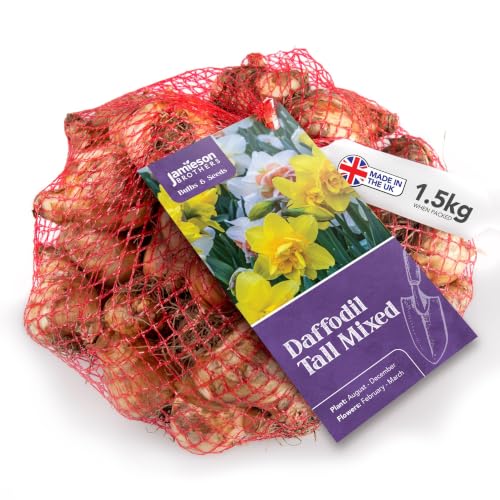
- BIGGER, BRIGHTER DAFFODILS: Get your daffodils planted NOW with this bumper daffodil sack. Jamieson Brothers’ Scottish-packed daffodil mixed bulbs 1.5kg pack, great for large gardens, woodland, riverbanks and parkland landscapes. Jamieson Brothers daffodil bulbs are larger at 10-14cm. One bulb will give you around 50% more flower heads than standard bulbs. Our classic mixed sack has a variety of white and yellow petals with sunny yellow and orange trumpets.
- PLANT AUGUST – DECEMBER IN YOUR GARDEN: Mixed daffodils and Narcissi are perfect for planting August – December so they bloom beautifully in springtime. Jamieson Brothers daffodil bulbs are sturdier than standard bulbs and when fully grown, these flowers grow to 15.7 inches. Mixed daffodils are great for creating a natural look of wild pops of white and yellow in large gardens, fields, riverbanks, parkland, woodland and grass verges. They also work well in hanging baskets and garden pots.
- HOW TO PLANT MIXED DAFFODILS: When fully grown, mixed daffodils and Narcissi grow to around 40cm so measure spaces before planting so bulbs can grow without restriction. It’s best to use a planting tool or trowel to make symmetrical, uniform holes. Plant 10cm deep and 4 inches (10cm) apart – two bulb-widths apart – in sun or shade and in free draining soil. Ensure you leave space between the bulbs when planting our large 5.5 inch, onion-sized daffodil bulbs so their roots have room to grow.
- TOP TIPS: A quick and easy way to plant them is to prise up the soil with a spade and then put them underneath. The best way to avoid bulbs that don't produce flowers (blind) is to make sure that they are planted deep enough, they are not too close together, the soil is not compacted and they have enough nutrients.
- EASY TO STORE: Store your bulbs in a cool dark room, outhouse or garage with the bag on its side to protect the bulbs from their own weight. Check every 2 weeks to ensure the bag hasn’t been bitten by pests. Our large daffodil bulbs can dehydrate sometimes when stored so the bulbs can be slightly smaller upon delivery. Note the bulbs are not edible. To get your bulbs off to the best start, we recommend Jamieson Brothers bulb planting compost that contains 6 months of slow release feeding.
2. Jamieson Brothers Mixed Daffodil Bulbs, 5kg Sack
The same idea scaled up. A 5kg sack is aimed at gardeners who want to naturalise daffodils under trees, along a hedge line or across a bank of grass. Planted in generous, informal drifts, daffodils come back and multiply year after year, so the cost is spread across many springs.
Pros: Very low cost per bulb, ideal for naturalising, plenty to share.
Cons: Heavy and a lot to plant in one go, and too many for a small plot.
Who it suits: larger gardens, orchards and anyone planting a long boundary.
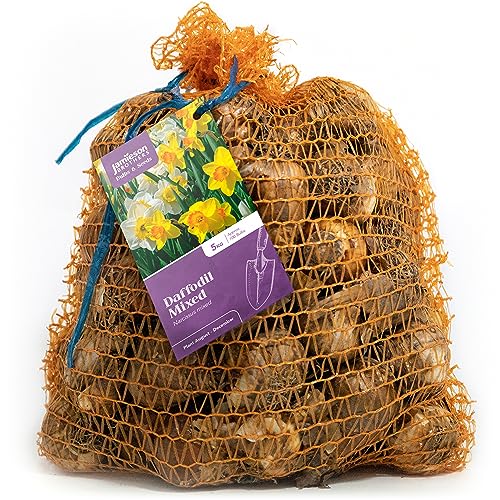
- BIGGER, BRIGHTER DAFFODILS: Get your daffodils planted NOW with this bumper daffodil sack. Jamieson Brothers’ Scottish-packed daffodil mixed bulbs 5kg pack boasts up to 100 bulbs, great for large gardens, woodland, riverbanks and parkland landscapes. Jami
- PLANT AUGUST – DECEMBER IN YOUR GARDEN: Mixed daffodils and Narcissi are perfect for planting August – December so they bloom beautifully in springtime. Jamieson Brothers daffodil bulbs are sturdier than standard bulbs and when fully grown, these flowers
- HOW TO PLANT MIXED DAFFODILS: When fully grown, mixed daffodils and Narcissi grow to around 40cm so measure spaces before planting so bulbs can grow without restriction. It’s best to use a planting tool or trowel to make symmetrical, uniform holes. Plant
- EASY TO STORE: Store your bulbs in a cool dark room, outhouse or garage with the bag on its side to protect the bulbs from their own weight. Check every 2 weeks to ensure the bag hasn’t been bitten by pests. Our large daffodil bulbs can dehydrate sometime
- ESTABLISHED IN SCOTLAND 1895: Jamieson Brothers were established in 1895 where we began selling our potatoes on a horse and cart. Nowadays we offer a range of gardening products for your every need, whether you’re a manufacturer growing vegetables at scal
3. Darwin Hybrid Tulip Apeldoorn, 30 Bulbs
Apeldoorn is one of the best known Darwin hybrid tulips, with large, bright blooms on strong stems. Darwin hybrids have a reputation for coming back more reliably in following years than many other tulips, which makes them a good choice for borders where you do not want to dig up bulbs every autumn.
Pros: Large, classic flowers, sturdy stems, tends to return better than many tulips.
Cons: One colour only, and tulips are more likely to be nibbled by squirrels and mice than daffodils.
Who it suits: gardeners wanting a bold, traditional tulip display in beds and borders.
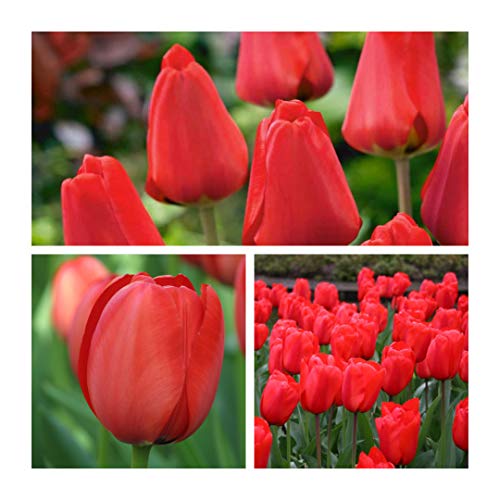
- The classic Red Darwin Hybrid Tulip.
- Flowering Time : Spring
- Colour:Red
- Flowering Height : 50 cm
- Bulb Size: 10/11
4. Tulip Double Early Mixed Bulbs, Pack of 30
Double early tulips have full, peony-like flowers that open earlier in spring and hold their shape well in wind and rain. A mixed pack of 30 gives a good spread of colours, and they work nicely in patio pots where you will see them up close.
Pros: Full, frilly flowers, early display, good value pack of 30.
Cons: Mixed colours are a lottery, and heavy blooms can flop in very wet weather.
Who it suits: pot growers and anyone who likes a lush, cottage-style look.
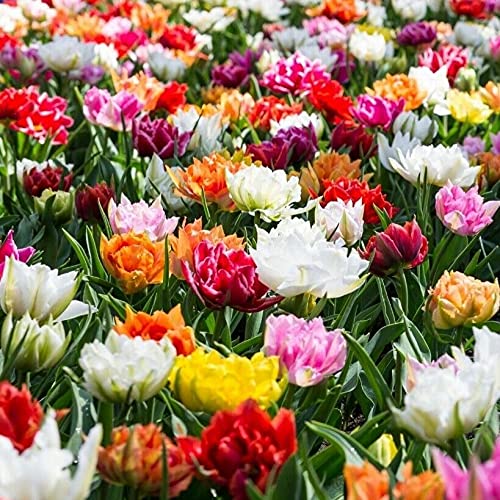
- Double Tulip Variety: Beautiful early flowering double tulip bulbs that create stunning garden displays
- Planting Season: Suitable for autumn planting from August to December for optimal growth and blooming
- Bulb Size: Premium quality bulbs measuring 10/11cm in diameter for reliable growth
- Double early blooms: Features full layered petals that open earlier than standard tulips creating a rich peony-style display at the start of spring
- Hardy and low-maintenance: Suited to typical UK conditions thrives in sunny or lightly shaded areas with well-drained soil
5. Oliwier’s Bulbs Dwarf Tulip Mixed, 10 Bulbs
Dwarf or botanical tulips are small, tough and charming. They are shorter than the big hybrids, so they cope with wind and look right in rockeries, gravel beds and window boxes. They are also generally more likely to return and spread than larger types.
Pros: Compact and weather resistant, ideal for small spaces, low price.
Cons: Only ten bulbs, and the flowers are smaller and less showy than the giant hybrids.
Who it suits: rockeries, small pots and exposed spots.

- Beautiful selection of dwarf Tulip varieties. Specially selected mixture for wilder gardens consisting of many different botanical varieties
- Botanical tulips are dwarf tulips that look wonderful planted in rock gardens, pots and containers and flower borders.
- Heigh: 20cm (approx)
- These are Autumn planting bulbs – ready to plant now for bloom in early spring Flower for weeks on end, from March onwards and naturalise well.
- You will receive pack of 10 quality bulbs size 5/6 in eco-friendly recyclable packaging with detailed instructions included
6. YouGarden 300 Spring Flowering Bulb Mixed Pack
If you have a lot of ground to cover, a 300-bulb mix is the budget route. Packs like this normally combine a range of small spring bulbs, which can be planted in big informal drifts for an instant meadow feel. The trade-off is that you are buying small bulbs of varying types rather than showpiece varieties.
Pros: Huge quantity for the price, good for large areas, mix of types.
Cons: Mostly small bulbs rather than large tulips or daffodils, and planting 300 takes time.
Who it suits: large lawns, wild areas and gardeners on a tight budget.
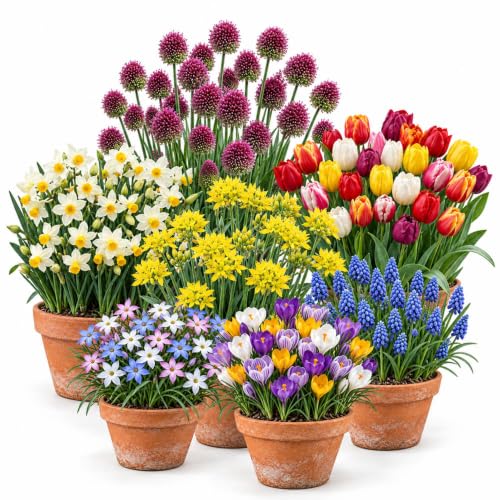
- FABULOUS COLOUR: Transform your garden with months of glorious colour, year after year, with this fantastic spring flowering bulb collection. Expect flowers from February through to July.
Buying Guide: Choosing and Planting Spring Bulbs
Buy firm, plump bulbs
Squeeze a bulb gently. It should feel firm, with no soft patches or mould. Larger bulbs generally flower better in their first year, so a bigger size is usually worth a slightly higher price.
Plant at the right depth
As a rule of thumb, plant bulbs at about three times their own height. For most daffodils and tulips that means roughly 10-15cm deep, with the pointed end facing up. A bulb planter makes this far quicker, particularly in a large drift.
Space them sensibly
Leave a gap of around two to three bulb widths between each one. In pots you can plant closer for a fuller look, as long as the bulbs are not touching.
Time your tulips for later
Plant daffodils from September and tulips from late October or November. Waiting until the soil is cooler helps to cut the risk of disease in tulips.
Think about drainage
Bulbs rot in waterlogged soil. On heavy clay, add some grit to the planting hole, and in pots make sure there are drainage holes and a free-draining compost.
Protect against squirrels
Squirrels and mice often dig up tulip bulbs. Laying fine mesh or chicken wire over the soil surface until growth starts is a simple and effective deterrent.
How to plant bulbs in a pot
- Choose a pot with drainage holes and add a layer of crocks or grit at the bottom.
- Part-fill with multi-purpose compost mixed with a little grit.
- Place the bulbs pointed end up, close together but not touching.
- Cover with compost so the tips are well below the surface, then water lightly.
- Keep the pot somewhere sheltered and do not let it sit in standing water over winter.
In spring, deadhead the flowers once they fade, but leave the leaves to die back naturally so the bulb can store energy for next year.
Frequently Asked Questions
When is the best time to plant daffodil bulbs?
From September to October is ideal. Planting them early gives them time to build roots before winter, which improves flowering the following spring.
Do tulips come back every year?
Some do, some do not. Darwin hybrids and botanical tulips are the most reliable, while fancy doubles and parrots often fade after a year or two. Planting deep and feeding after flowering helps.
Can I plant bulbs in the lawn?
Yes, daffodils and small bulbs are well suited to naturalising in grass. Remember you will need to leave the mowing until the leaves have died back, normally about six weeks after flowering.
Our Recommendation
For most gardens, the mixed daffodil bag is the easy win, and a pack of Apeldoorn or double early tulips adds colour later in the spring. If you have a lot of space, the 5kg daffodil sack or the 300-bulb mix is great value, while the dwarf tulips suit rockeries and small pots. Whichever you choose, plant daffodils early, tulips later, and give them a well-drained spot.
More Garden Reviews
Looking for more? These related MyGreenShed guides are worth a read next: