If you have ever stood in B&Q staring at a wall of grass seed wondering why one box is £9 and the next is £35, this guide is for you. Pick the right mix for your lawn and within six weeks you can have a thicker, greener, more resilient lawn. Pick the wrong one — say, a hardwearing ryegrass mix in a shaded north-facing patch — and you will be looking at patchy, struggling grass by August.
We have tested grass seed in clay, sand, full sun, deep shade, and on the kind of well-trampled garden where two children, a dog and a trampoline are the main pressures. Below are the seven mixes we keep coming back to in 2026, plus a quick guide to picking the right one for your lawn.
Quick picks
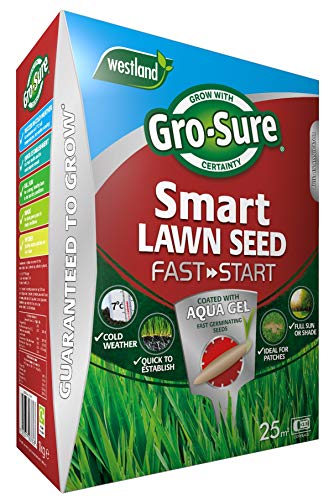
Best overall: Gro-Sure Smart Seed Fast Start — proven, widely available, and germinates faster than almost anything else.
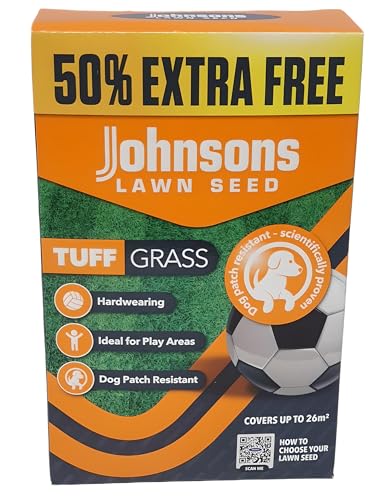
Best for kids and pets (hardwearing): Johnsons Tuffgrass — built around a blend of dwarf ryegrass and creeping fescue.
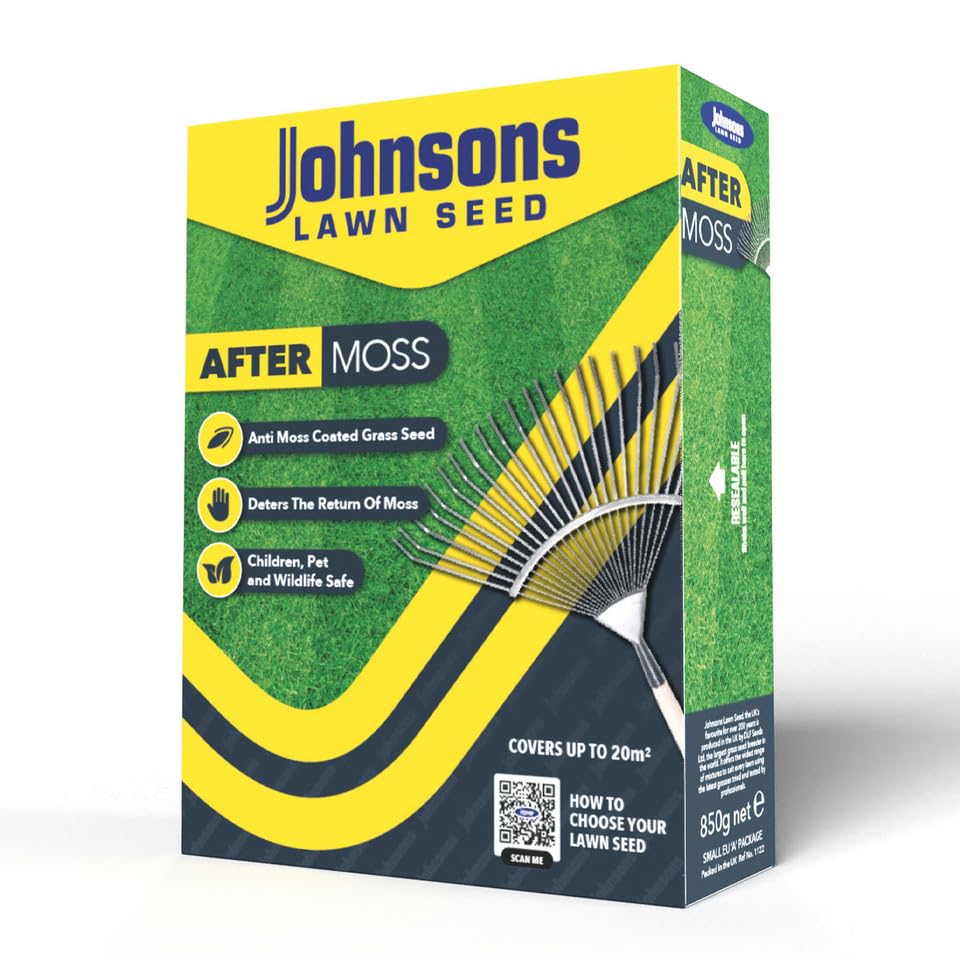
Best for shade: Johnsons After Moss — a tough, proven shade mix.
Best for overseeding a tired lawn: Miracle-Gro EverGreen Multi-Purpose Grass Seed — fast, cheap and reliable for patching.
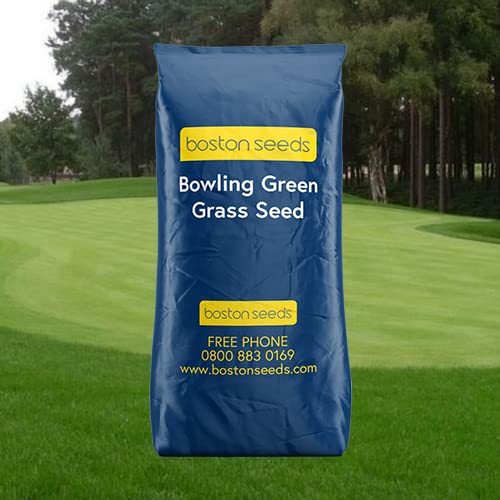
Best premium fine lawn: Boston Seeds The Showpiece — bowling-green quality from a UK seed merchant.
How we picked these grass seed mixes
Grass seed in the UK is broadly built from four species: perennial ryegrass (tough, fast, the workhorse of family lawns), red fescue (fine-leaved, tolerates shade and drought), smooth-stalked meadow grass (spreads to fill gaps), and bent grass (very fine, very slow, only really for ornamental lawns). Every mix is a blend of these designed for a particular use case.
We chose mixes that are widely available in the UK from Amazon UK, B&Q, Wickes, garden centres or specialist seed merchants. We weighted germination speed, drought tolerance, wear resistance, and shade performance based on Sports Turf Research Institute (STRI) trial ratings where the manufacturer publishes them, plus our own use over several seasons. We have not included anything we couldn’t find in stock at a UK retailer this spring.
1. Gro-Sure Smart Seed Fast Start — Best Overall
Type: hardwearing family lawn mix. Coverage: around 30 m² per box.
Gro-Sure’s coated seed is what most UK gardeners reach for, and there is a reason. The seeds are wrapped in a moisture-retaining coating that swells when watered, which keeps them hydrated through the typical British ‘dry spell after seeding’ that kills uncoated seed. Germination is fast — we saw greening at around seven days in mid-May and a usable lawn by week six.
The mix itself is a blend of dwarf ryegrass and fescues, so it stands up to children, light dog use and a Saturday football match. It is not the finest looking lawn — too much ryegrass for that — but it is robust and practical.
Pros: fast germination, very forgiving of watering mistakes, widely stocked at B&Q, Wickes and Amazon UK. Cons: pricier per square metre than uncoated seed; the coating slightly inflates the box weight, which matters less than the marketing suggests.
Around £25–£35 for the medium box. Best for: most family gardens, first-time lawn owners.
2. Johnsons Tuffgrass — Best for Kids and Pets
Type: hardwearing wear-tolerant mix. Coverage: around 20 m² per kg.
Johnsons have been doing UK grass seed for over 200 years and Tuffgrass is their answer to the worn-out family lawn. The mix is around 70% modern dwarf perennial ryegrasses (varieties chosen for their wear score) and 30% creeping red fescue, which knits the surface together and helps gaps recover.
We have used this on a garden with two kids, a Labrador and a paddling pool that lives on the lawn for three months a year, and it copes. The blade is darker green and a touch coarser than a fine-lawn mix, but you trade aesthetics for resilience.
Pros: STRI-rated wear tolerance, deep green colour, available in everything from 250 g pouches to 10 kg sacks. Cons: ryegrass is not the prettiest grass; mow weekly through summer or it goes thatchy.
Around £15 for 1.5 kg. Best for: family lawns, garden play areas, dog-owning households.
3. Johnsons After Moss — Best for Shaded Lawns
Type: shade-tolerant mix designed for overseeding after moss treatment. Coverage: around 25 m² per kg.
Most UK lawns have a problem corner that gets very little direct sun — under a tree, against the north fence, behind the shed. Standard ryegrass-heavy seed will struggle here and lose ground to moss. After Moss is built around shade-tolerant fine fescues with just enough ryegrass to thicken up. The germination is slower (10–14 days in our trial) because fescues are slower than ryegrass, but it knits beautifully into existing turf.
We pair this with an iron-based moss killer applied two weeks before seeding, then rake out the dead moss before sowing. Without that preparation, no seed will fix a mossy shaded lawn — moss simply outcompetes new seedlings.
Pros: genuinely good in shade, blends seamlessly with existing lawns. Cons: slow to establish; cannot save deeply waterlogged shaded ground without drainage work.
Around £18 for 1.5 kg. Best for: north-facing lawns, gardens with mature trees, anywhere that struggles with moss.
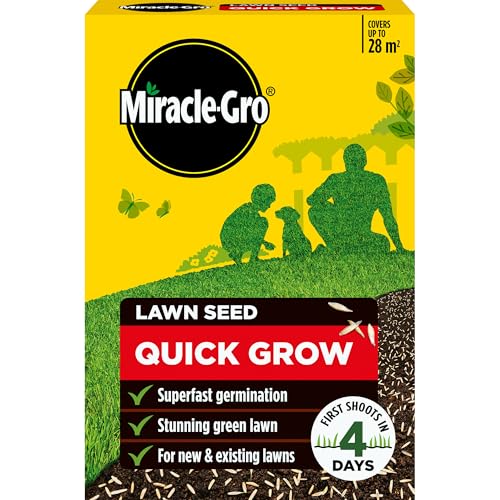
4. Miracle-Gro EverGreen Multi-Purpose Grass Seed — Best Budget Pick
Type: general-purpose lawn mix. Coverage: around 35 m² per kg.
If you just need to patch a few worn-out areas before a summer party, this is the practical choice. Germination is quick (around 7–14 days), the mix is forgiving, and the per-square-metre cost is lower than the premium boxes. It is uncoated seed, which means it needs more careful watering — twice a day during the first fortnight in dry weather.
It is not the seed we would choose to lay a brand new lawn from scratch, but for spot-overseeding it is excellent value.
Pros: cheap per kg, widely stocked, fast germination. Cons: uncoated seed dries out fast; the mix is not as wear-resistant as Tuffgrass.
Around £8 for 480 g. Best for: patching, overseeding, gardeners on a budget.
5. Boston Seeds The Showpiece — Best Premium Fine Lawn
Type: ornamental fine-leaved fescue mix. Coverage: around 20 m² per kg.
Boston Seeds is a UK seed merchant supplying golf clubs and bowling greens, and The Showpiece is their consumer fine-lawn mix. It is almost entirely chewings fescue, slender creeping red fescue and brown top bent — no ryegrass at all. The result is the kind of fine, stripable lawn that looks beautiful but needs more care.
You will need to mow weekly with a cylinder mower to get the best out of this mix; rotary mowers don’t really do it justice. It also needs feeding properly through the season. If you are happy to put in the work, the result is genuinely lovely.
Pros: stunning fine-leaved finish, drought-tolerant once established. Cons: slow to establish (3–4 weeks); not suitable for kids or dogs; needs proper mowing kit.
Around £30–£40 for 1 kg. Best for: ornamental front lawns, enthusiastic lawn keepers.
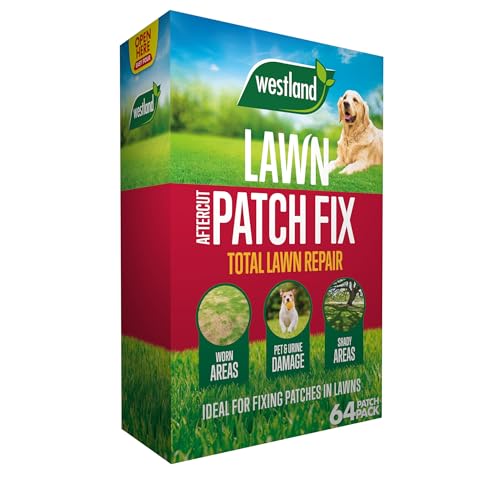
6. Westland Aftercut Patch Fix — Best All-in-One Patch Repair
Type: seed + feed + coir mulch combined. Coverage: around 4 m² per pack.
If you have a few bare patches and don’t want to faff with separate seed, soil and feed, this is the easy answer. It combines a coated ryegrass-fescue mix with a coir mulch (which holds water) and a starter fertiliser (which feeds new roots). You pour it on the bare spot, water, and walk away.
It is not cheap per square metre, but for someone with three or four small bare patches it is genuinely the simplest fix on the shelf.
Pros: idiot-proof, fast germination, good colour. Cons: expensive per m² compared to plain seed; you can replicate the effect cheaper with loose seed plus a thin layer of compost.
Around £12 for the standard tub. Best for: bare patches, lazy lawn fixes, anyone who finds gardening fiddly.
7. DLF ProMaster 50 (Sport Pro) — Best Pro Hardwearing Mix
Type: professional sports turf mix. Coverage: around 25 m² per kg.
DLF supply a lot of UK football pitches and DLF ProMaster 50 is one of their consumer-friendly mixes. It is essentially four blended dwarf ryegrass cultivars chosen for high wear scores — no fescue. That single-species design means every seedling germinates at the same rate and you get a uniform, dense surface.
If you have a kickabout lawn and care about how quickly bare patches recover, this is genuinely better than the multi-species supermarket mixes. It does not look as natural in colour and texture as a fescue blend, but for sheer toughness little else competes.
Pros: outstanding wear tolerance, very dense surface, available direct from DLF and via Amazon UK. Cons: pure ryegrass — coarser blade, less drought tolerance than mixes with fescue; not ideal for shade.
Around £25 for 1 kg. Best for: sports lawns, garden goalposts, large back lawns that take a beating.
Comparison table
| Seed | Best for | Speed | Wear | Shade | Price |
| Gro-Sure Smart Seed Fast Start | Most lawns | Very fast | Good | OK | £25-35 |
| Johnsons Tuffgrass | Family lawns | Fast | Excellent | OK | £15 |
| Johnsons After Moss | Shade | Slow | Moderate | Excellent | £18 |
| Miracle-Gro EverGreen | Patching | Fast | Moderate | OK | £8 |
| Boston Seeds Showpiece | Ornamental | Slow | Low | Moderate | £30-40 |
| Westland Patch Fix | Bare patches | Very fast | Good | OK | £12 |
| DLF ProMaster 50 | Sports lawns | Fast | Excellent | Poor | £25 |
How to choose the right grass seed for your lawn
Three questions sort it. First, how is the lawn used? If it has kids, dogs, or sees regular foot traffic, pick a hardwearing ryegrass-led mix (Tuffgrass, ProMaster, Smart Seed Fast Start). If it is purely ornamental, go fescue-led (Showpiece, fine lawn mixes). Second, what is the light? Anywhere that gets less than four hours of direct sun a day needs a shade mix (After Moss). Third, are you laying a new lawn or patching? New lawns suit coated seed for moisture retention; patches do fine with cheaper uncoated seed if you can water diligently.
Soil matters less than people think. Modern UK grass mixes will handle clay, loam and most sandy soils. Free-draining sandy soils benefit from compost-based pre-seeding mulch; heavy clay benefits from a light topdressing of sandy loam after sowing.
When to sow grass seed in the UK
The two big windows are mid-March to late May, and early September to mid-October. Soil temperature is the key factor — you want it consistently above 8°C, which is broadly when daffodils are flowering in spring or when the night-time chill returns in autumn. Avoid the high-summer (late June to August) — heat and drought stress new seedlings, even if you water.
If you are sowing in May, pay attention to the long-range weather. A dry fortnight after sowing will kill uncoated seed unless you water morning and evening. Coated seeds (Smart Seed) buy you a few extra days of grace.
Practical sowing tips
Rake the soil to a fine tilth before sowing — break up clumps and remove stones. Sow at the rate the manufacturer specifies (most mixes are around 35 g/m² for new lawns, 25 g/m² for overseeding). Rake gently again to settle the seed into the surface, then water with a fine rose. Net the area against birds if pigeons are a problem, which they are everywhere in the UK.
Don’t mow until the new grass is at least 6 cm tall, and even then only take a third of the height off the first time. The young roots are still fragile.
Final verdict
For most UK gardens, Gro-Sure Smart Seed Fast Start is hard to beat as a default choice — fast, forgiving and widely available. If you have kids or a dog, swap to Johnsons Tuffgrass for the wear resistance. Shaded corners need a proper shade mix like Johnsons After Moss, and if you fancy a bowling-green look, Boston Seeds Showpiece will get you there with the right care. None of these are perfect for every situation, but pick the one that matches your lawn and you will see a real difference within six weeks.
Related reading
Best Lawn Feed UK 2026 — pair the right feed with your new seed.
How to Scarify Your Lawn — Step-by-Step UK Guide.
Best Lawn Aerator UK 2026 — relieve compaction before seeding.
When to Mow Your Lawn – UK Seasonal Guide.