An unkempt garden perimeter doesn’t merely look neglected, it encroaches on usable lawn and complicates upkeep. Whether you’re dealing with grass around planting areas, pathway edges or borders, choosing the right trimmer is essential. This guide examines top-performing options across cordless, corded electric and petrol categories, helping you find the model that matches your garden and budget.
Quick Comparison Table
|
Product |
Type |
Best For |
Price |
|
Flymo Mini Trim ST |
Corded electric |
Budget-conscious buyers |
See card for current price |
|
BLACK+DECKER STC1820PC-GB |
18V cordless |
Small gardens, cordless convenience |
See card for current price |
|
WORX GT 3.0 (WG163E) |
20V cordless |
2-in-1 trimmer and edger |
See card for current price |
|
Makita DUR368LZ |
Twin 18V (36V) cordless |
Longer runtime, tougher work |
See card for current price |
|
Mountfield MM2605 |
25.4cc petrol |
Larger or overgrown plots |
See card for current price |
Our Top Picks
1. Flymo Mini Trim ST
This corded electric trimmer delivers genuine value for modest outdoor spaces. It is light, has a 21cm cutting span and a 230W motor, and needs no battery maintenance or petrol handling. Operation is plug-and-play: no charging, no engine servicing, no fuel mixing. It is also far quieter than petrol.
Key specs: 230W electric, 21cm cutting width, manual line feed, corded.
Pros: – Remarkably affordable – Lightweight design reduces fatigue – Instant start with no battery – Low maintenance
Cons: – Tethered operation limits your range – Unsuitable for dense or established vegetation – Needs careful cable management outdoors
Best for: Small gardens and gardeners on a tight budget


2. BLACK+DECKER STC1820PC-GB
This 18V system is an accessible entry point to battery-powered trimming. The 28cm cutting span handles standard border maintenance, and the AFS automatic feed system supplies new line as you work. The 2.0Ah battery suits smaller and medium gardens, and it works across BLACK+DECKER’s PowerConnect 18V range.
Key specs: 18V lithium-ion (2.0Ah), 28cm cutting width, AFS automatic line feed.
Pros: – Cable-free without a big power compromise – Automatic line advance – Compact to store – Battery works with other PowerConnect tools
Cons: – Runtime constrains larger properties – Narrower cutting span than some rivals – Not suited to thick, resistant vegetation
Best for: Small-to-medium gardens wanting cordless convenience

3. WORX GT 3.0 Cordless Grass Strimmer (WG163E)
This dual-function tool works as a trimmer and a wheeled edger, so you avoid buying a separate edger. The 30cm cutting span and Command Feed line advance keep you working without stopping. The kit we link includes two 2.0Ah batteries and a charger, and the batteries work across the WORX PowerShare range.
Key specs: 20V PowerShare, 30cm cutting width, Command Feed, 2-in-1 trimmer/edger, 90 degree pivot head, 2 x 2.0Ah batteries and charger.
Pros: – Trimmer and edger in one tool – Two batteries included for longer sessions – Comfortable for extended use – Strong value
Cons: – Battery limits very large properties – Edging precision trails dedicated edgers – Struggles with exceptionally dense growth
Best for: Anyone wanting a versatile 2-in-1 tool with strong performance

4. Makita DUR368LZ
Makita’s professional tool reputation carries into this residential-friendly model. It runs on two 18V LXT batteries (36V) for more cutting authority than single-battery tools, and the 35cm head covers ground efficiently. It is sold body only, so you need two 18V batteries and a charger. Existing Makita 18V owners get the best value.
Key specs: Twin 18V (36V) LXT, brushless motor, 35cm cutting head, body only.
Pros: – Professional-standard build – 36V setup handles demanding edges and heavier growth – Wide head reduces passes – Uses Makita 18V batteries
Cons: – Premium price for the tool alone – Batteries and charger sold separately – More than a small garden needs
Best for: Mid-range gardeners wanting professional-grade reliability

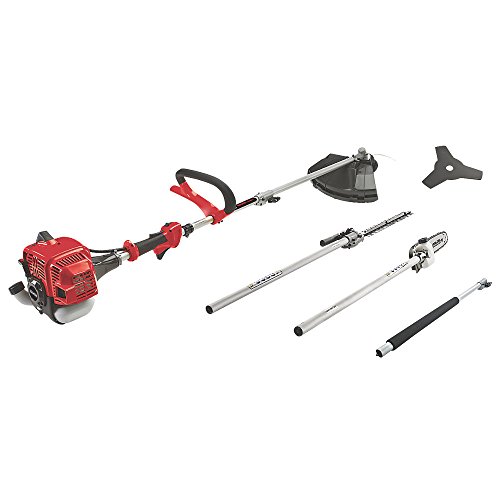
5. Mountfield MM2605 25.4cc Petrol Multi-Tool
This petrol option suits gardeners who prioritise cutting capability and unlimited runtime over convenience. The 25.4cc two-stroke engine is aimed at overgrown edges and rough areas that would challenge lighter cordless kit, and the multi-tool design lets you swap the strimmer head for other attachments. It is a home-use machine rather than a professional brush cutter.
Key specs: 25.4cc two-stroke petrol engine, multi-tool design with interchangeable attachments.
Pros: – Unlimited runtime, limited only by fuel – Handles rougher, more overgrown ground than small cordless tools – Multi-tool attachments add versatility
Cons: – Louder than electric and cordless options – Needs fuel mixing and seasonal maintenance – Heavier and more work to start and store
Best for: Larger or overgrown plots where cordless runtime falls short
Buying Guide: How to Choose the Best Strimmer
What to Look For
Cutting Width
Wider spans reduce the number of passes. Budget cordless models typically offer 25-28cm, mid-range options 30-35cm, and petrol machines can go wider. Gardens under 500 square metres suit 25-28cm; larger properties benefit from 30cm or more.
Motor Power and Runtime
Battery voltage indicates available power: 18V is entry level, 20V mid-tier and 36V (twin 18V) more demanding. Aim for at least 30 minutes of runtime for small gardens, 45 minutes for medium plots and 60 or more for large grounds. Petrol engines are rated in cc, and 25cc-plus suits most residential jobs.
Weight and Balance
Lighter tools reduce fatigue, particularly in long sessions. Under 2.5kg is comfortable for most people, while much heavier tools get tiring quickly. Front-heavy strimmers are harder to control.
Automatic vs Manual Line Feed
Automatic feed is a genuine convenience that justifies a price premium. Manual feed means stopping to advance line, which breaks your momentum. Check the specification, as some budget models still use manual feed.
Noise Level
Corded and battery models are far quieter than petrol, making them better for early mornings and close neighbours. Petrol strimmers are noticeably louder, so consider neighbours and local rules before choosing one.
Types of Strimmers
Corded Electric
Advantages: consistent power, lowest cost, quiet, minimal upkeep. Disadvantages: cord limits range and ties you to a socket. Best for small, regularly maintained gardens near a power outlet.
Battery Cordless
Advantages: freedom of movement, no emissions, quiet, easy to use. Disadvantages: limited runtime, battery ageing, higher initial cost. Best for residential gardeners who want convenience and reasonable performance.
Petrol Powered
Advantages: maximum cutting authority, unrestricted runtime. Disadvantages: heavier, noisy, needs fuel and maintenance, and produces emissions. Best for large properties or demanding vegetation.
How Much Should You Spend?
Budget
Basic corded or entry-level cordless equipment for small gardens and light, casual use. Expect basic specifications and shorter cordless runtime. Examples: Flymo Mini Trim ST, basic Ryobi and WORX models.
Mid-Range
Dependable cordless strimmers with adequate runtime and power, suiting most residential gardeners. Examples: BLACK+DECKER STC1820PC-GB, WORX GT 3.0.
Premium
Serious cordless platforms with better build quality and longer runtime with extra batteries. Examples: Makita DUR368LZ, EGO Power+ models.
Petrol
For larger plots or tougher vegetation where cordless runtime falls short. Example: Mountfield MM2605.
Frequently Asked Questions
Q: Is a cordless strimmer powerful enough for thick vegetation?
A: Modern cordless strimmers perform impressively for conventional garden upkeep and established edges. For significantly overgrown areas, thick undergrowth or woody stems, petrol equipment or higher-voltage cordless (36V) tools work better. Most residential spaces manage comfortably with 20V cordless though.
Q: How long does a cordless strimmer battery last?
A: Duration varies considerably. Entry-level 18V batteries typically last 20-30 minutes, mid-tier 20V models 45-60 minutes, and higher-voltage setups with larger batteries can go longer. Most suburban gardens finish on one charge, and a second battery lets you keep going while the first recharges.
Q: Can I use a strimmer on wet grass?
A: Corded electric strimmers need dry conditions because of electric shock risk. Cordless models are safer but cut less effectively on wet vegetation. Petrol strimmers cope better with damp. Generally, wait a few hours after rain or for dew to clear to get the best results with any type.
Q: What’s the difference between a strimmer and an edger?
A: Strimmers use a rotating line for general grass cutting. Edgers use a rigid blade or wheel to make precise borders along paths and beds. Many modern strimmers, like the WORX GT 3.0, convert between the two. Dedicated edgers give neater lines but are less versatile.
Final Verdict
Your choice hinges on garden size, budget and how much maintenance you will tolerate. For typical UK gardeners, cordless systems like the WORX GT 3.0 or BLACK+DECKER STC1820PC-GB balance convenience, power and cost well. Budget-conscious buyers find impressive value in the Flymo Mini Trim ST, while those wanting professional-grade reliability should look at the Makita DUR368LZ. Petrol, such as the Mountfield MM2605, is worth considering only for larger or overgrown plots; the extra noise and upkeep are not justified in a typical residential garden.