There is nothing more disheartening than losing your plants to a single hard frost. A greenhouse heater’s main job is frost protection rather than creating warmth, and the right one depends on greenhouse size, power availability and running costs. We have looked at practical options for British winters, from electric fan heaters to tubular heaters and paraffin.
Quick Verdict Summary
If you have electricity in the greenhouse, an electric fan heater with a built-in thermostat is the sensible choice. The Bio Green Palma suits small to medium structures, the Bio Green Phoenix suits larger ones, the Parasene Super-Warm 4 covers off-grid situations, and tubular heaters give basic background frost protection.
How to Choose a Greenhouse Heater
Power source options
Electric heaters are the cleanest and most controllable option, but they need a properly installed outdoor-rated supply, fitted by a qualified electrician on an RCD-protected circuit.
Paraffin heaters work without electricity, so they suit allotments and off-grid plots, though they need ventilation and refuelling.
Gas heaters running on bottled propane or butane produce plenty of heat but share paraffin’s drawbacks on ventilation and moisture.
Sizing guidance
- Small 6×4 or 6×6 greenhouses: 1kW to 2kW electric heater or a single paraffin burner
- Medium 8×6 greenhouses: 2kW to 2.5kW fan heater
- Larger 8×10+ structures: 2.8kW to 3kW unit, or two smaller heaters
Bubble insulation on the inside of the glass dramatically cuts how much heat you need.
Running costs and thermostats
A thermostat is the single most important feature for keeping bills down. Without one, a 2kW heater running overnight becomes very expensive. Set it to around 3 to 5 degrees for frost protection.
Quick Comparison Table
|
Heater |
Type |
Output |
Best for |
Price |
|
Bio Green Palma Basic |
Electric fan |
2.0kW |
Small-medium greenhouses |
See card for current price |
|
Bio Green Phoenix |
Electric fan |
2.8kW |
Large greenhouses |
See card for current price |
|
Bio Green Palma (Digital Thermostat) |
Electric fan |
2.0kW |
Precise temperature control |
See card for current price |
|
Budget 2kW greenhouse fan heater (slot open) |
Electric fan |
2kW |
Budget frost protection |
No card yet |
|
Tubular heater (slot open) |
Electric tube |
45-240W each |
Low-cost background heat |
No card yet |
|
Parasene Super-Warm 4 |
Paraffin |
n/a |
Off-grid greenhouses |
See card for current price |
Our Top Picks
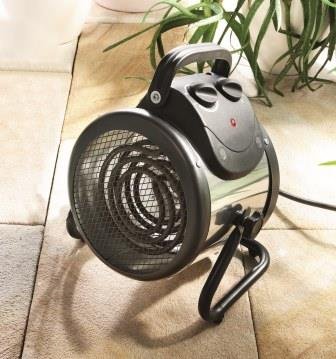
1. Bio Green Palma Basic 2.0kW Electric Fan Heater – Best Overall
A well-built stainless steel unit designed for greenhouse humidity, with a manual thermostat, and it can run as a cooling fan in summer. It comfortably keeps a small to medium greenhouse frost-free.
Key specs: Electric fan heater; 2.0kW; stainless steel housing; manual thermostat; cool-air fan setting.
Pros: – Robust, damp-resistant stainless steel construction built for greenhouse use – Built-in thermostat keeps running costs sensible – Doubles as a summer cooling fan
Cons: – More expensive than generic fan heaters – The manual thermostat is less precise than the digital version
Best for: Small to medium greenhouses where you want a dependable, purpose-built heater.
2. Bio Green Phoenix 2.8kW – Best for Large Greenhouses
A higher-capacity model suited to larger structures such as 8×8 glasshouses and above, with plenty of airflow and a reliable stainless steel build.
Key specs: Electric fan heater; 2.8kW; thermostat control; stainless steel; cooling fan mode.
Pros: – Plenty of output for larger greenhouses – Well made and reliable, with good airflow – Also works as a summer fan
Cons: – One of the pricier options here – Overkill for a small 6×4 greenhouse
Best for: Larger greenhouses of 8×8 and above.

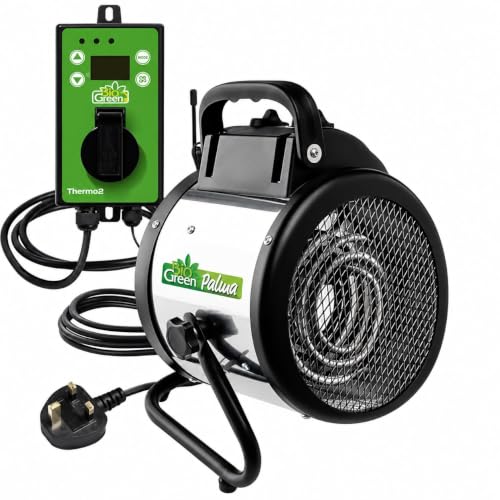
3. Bio Green Palma 2.0kW with Digital Thermostat – Best for Precise Control
The same tough Palma heater paired with a digital thermostat, letting you set and hold your target temperature accurately, useful for tender plants and seedlings.
Key specs: Electric fan heater; 2.0kW; digital thermostat included; stainless steel housing.
Pros: – Accurate digital temperature control – Greenhouse-rated stainless steel build – Keeps running costs down by avoiding overheating
Cons: – Costs more than the basic Palma – Not needed for simple frost protection
Best for: Gardeners overwintering tender plants or raising early seedlings.
4. Budget 2kW Greenhouse Fan Heater – Best Budget Electric
(Slot open: no verified ASIN yet.) A purpose-made 2kW greenhouse fan heater with a thermostat dial and separate fan setting is the budget route to frost protection. Choose one designed for greenhouse use, not an indoor household fan heater.
Key specs: Electric fan heater; around 2kW; adjustable thermostat; fan-only setting.
Pros: – Low purchase price – Compact and portable – Fine for occasional frost protection in a small greenhouse
Cons: – Basic build quality – Thermostat is less precise
Best for: Small greenhouses needing only occasional frost protection.
5. Greenhouse Tubular Heater – Best for Low-Cost Frost Protection
(Slot open: no verified ASIN yet.) Slim electric tubes that sit along the greenhouse floor providing gentle, steady warmth, available in a range of wattages. They are the quiet workhorses of frost protection, best thought of as background frost protection rather than a way to create real warmth.
Key specs: Electric tube; roughly 45W to 240W depending on length; fixed low output.
Pros: – Low running costs thanks to modest wattage – Gentle, even background heat with no moving parts – Discreet and easy to mount along the greenhouse floor
Cons: – Not powerful enough for rapid or serious heating – Larger greenhouses need several tubes
Best for: Small greenhouses and cold frames needing basic background frost protection.
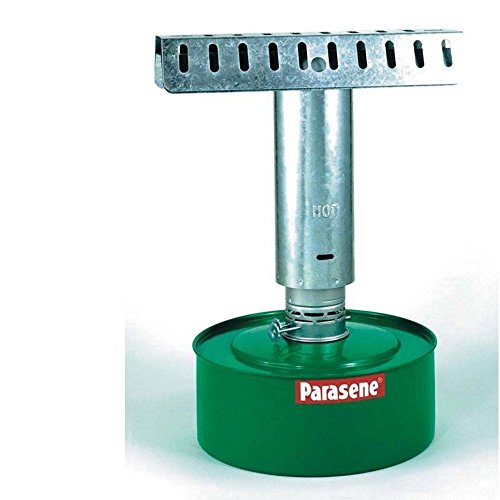
6. Parasene Super-Warm 4 Paraffin Heater – Best Off-Grid Option
A traditional paraffin heater that needs no electricity: fill it, light it and it keeps going. Suitable for allotments without power access.
Key specs: Paraffin; single burner; no electricity needed; running cost is fuel only.
Pros: – No electricity needed, ideal for allotments and off-grid plots – Simple, dependable and inexpensive to buy – Good frost protection for small to medium greenhouses
Cons: – Needs refuelling and produces fumes and moisture – Requires ventilation and careful use around the open flame
Best for: Allotments and off-grid greenhouses with no power supply.
Getting the Most from Your Greenhouse Heater
- Install horticultural bubble insulation to trap a layer of still air and reduce heat loss substantially
- Make sure doors and vents close properly and block draughts
- Group tender plants together so you heat a smaller zone
- Use staging or fleece to keep pots off cold concrete
- Set the thermostat as low as your plants tolerate
- Use a max-min thermometer to monitor actual overnight temperatures
On mild nights the heater may barely run at all, which is exactly what you want.
Frequently Asked Questions
What temperature should I set my greenhouse heater to?
For frost protection, around 3 to 5 degrees Celsius is plenty for most plants and keeps running costs low. Tender or exotic plants may need 7 to 10 degrees.
Are electric greenhouse heaters expensive to run?
Only if they run constantly. With a thermostat and good insulation, an electric heater fires up just when the temperature drops, so on many nights it costs very little. Continuous running of a 2kW heater is expensive, which is why a thermostat is essential.
Can I use a normal household fan heater in my greenhouse?
It is not recommended. Ordinary indoor fan heaters are not built for the damp, humid conditions of a greenhouse and can be a safety risk. Purpose-made greenhouse heaters have splash-resistant construction.
Do I need a heater for an unheated greenhouse in summer?
No. Heaters address winter needs; summer management is about cooling through shading and ventilation. Some models, such as the Bio Green units, double as cooling fans.
Final Verdict
For UK gardeners with power in the greenhouse, an electric fan heater with a thermostat is the smart choice, with the Bio Green Palma Basic recommended for small to medium structures. The Phoenix suits larger spaces, the digital-thermostat Palma suits tender plants, tubular heaters provide affordable background warmth, and the Parasene Super-Warm 4 serves off-grid locations. Whichever you choose, pair it with good insulation and a low thermostat setting and your tender plants should sail through the winter.