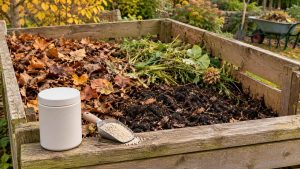
Autumn leaves are untapped potential. Leaf mould is one of the finest and most useful soil improvers you can make, and it costs you absolutely nothing. Unlike standard compost, leaves break down through fungal action rather than bacterial breakdown, so all you really need is proper containment and good airflow. Here are the best leaf mould bins and leaf composters for UK gardens, from wire cages to wooden bins and sacks.
What to Look For in a Leaf Composter
Airflow is the single most important feature, because the fungi that break down leaves need oxygen. Open-sided designs with mesh or slatted construction outperform sealed plastic bins.
Size: a 300-litre capacity suffices for gardens with one or two trees, while larger properties benefit from 600+ litre systems or multi-bay arrangements.
Material and aesthetics: wire cages offer affordability and discretion; wooden options provide visual appeal suited to a prominent spot.
The Best Leaf Mould Bins and Composters
Wire Mesh Leaf Cage (Best Value)
The Gr8 Garden Large 458 Litre Metal Wire Mesh Compost Bin is a simple open mesh cylinder that gives leaves excellent airflow. It is portable, easy to lift off when the leaf mould is ready, and functional rather than pretty.
Key specs: 458 litre capacity; metal wire mesh; open-sided for airflow; flat-packed.
Pros: – Excellent airflow for fungal breakdown – Portable and easy to remove when finished – Very affordable
Cons: – Minimal aesthetic appeal – Loose leaves can blow out of the top in wind
Best for: Most gardens wanting cheap, effective leaf mould.

Easipet Wooden Compost Bin (Best Affordable Wooden Option)
The Easipet Wooden Compost Bin 328L (Beehive Style 337) has a slatted timber design that gives good airflow and weathers to a natural grey. An occasional coat of preservative keeps it durable.
Key specs: 328 litre capacity; slatted wooden beehive style; FSC timber.
Pros: – Good airflow through the slats – Looks attractive in a visible spot – Affordable for a wooden bin
Cons: – Needs occasional preservative treatment – Modest capacity for larger gardens
Best for: Gardeners who want a wooden look on a budget.

Original Organics FSC Wooden Leaf Mould Composter (Best Premium Wooden)
Built from pressure-treated FSC-certified British timber, these heirloom-quality bins support modular expansion. Single units hold roughly 400 litres, with multi-bay systems reaching 1,000+ litres.
Key specs: FSC pressure-treated timber; ~400 litres per unit; modular.
Pros: – Built to last for years – Expandable with extra modules
Cons: – Higher upfront cost than mesh or sacks
Best for: Quality-focused gardeners wanting a lifetime investment.
(Card pending: Amazon UK ASIN not yet verified.)
Jute or Hessian Leaf Sacks (Best for Small Gardens)
The Yuzet 10x Large Natural Jute Compostable Leaf Sacks are biodegradable fabric sacks that breathe while holding moisture, ideal for balconies, courtyards and small plots.
Key specs: pack of 10; natural jute; compostable; breathable.
Pros: – Breathable storage for leaves – Suits limited space – Biodegradable fabric
Cons: – Sacks rot down and need replacing over time – Less capacity than a fixed bin
Best for: Small gardens, balconies and courtyards.

Garland or GreenJem Plastic Mesh Composter (Best Lightweight)
These rust-resistant plastic mesh designs offer quick assembly and open-structure ventilation. UV exposure can cause brittleness over extended periods.
Key specs: plastic mesh; open structure; quick assembly.
Pros: – Lightweight and rust-proof – Quick to put together
Cons: – UV can make plastic brittle over time
Best for: Gardeners wanting a light, easy-to-move bin.
(Card pending: Amazon UK ASIN not yet verified.)
Pop-Up Leaf Tidy Bag (Best for Collecting and Storing)
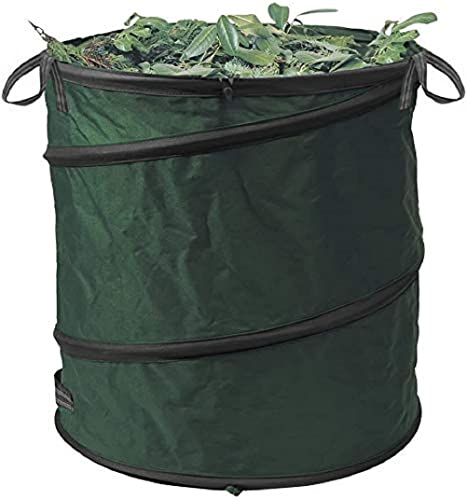
The Bosmere Large Pop Up Garden Waste Bag (G611, 162L) works as both a leaf collection tool and a temporary container. It folds flat for storage.
Key specs: 162 litre capacity; collapsible pop-up design; Bosmere G611.
Pros: – Portable and folds away compactly – Doubles as leaf collector and store
Cons: – Not a permanent leaf mould bin – Sealed sides limit airflow
Best for: Collecting leaves and temporary storage.
Three-Bay Wooden Composter (Best for Large Gardens and Allotments)
Multi-bay systems enable staggered leaf processing, so finished leaf mould is always available while the next bay takes new material. DIY pallet construction is a budget alternative.
Key specs: three bays; timber construction; 1,000L+ combined capacity.
Pros: – Staggered batches for a steady supply – Suits large gardens and allotments
Cons: – Needs the most space – Highest cost
Best for: Large gardens and allotments.
(Card pending: Amazon UK ASIN not yet verified.)
At-a-Glance Comparison Table
|
Leaf Composter |
Best For |
Capacity |
Price |
|
Gr8 Garden wire mesh bin |
Value / most gardens |
458L |
See card for current price |
|
Easipet Wooden Bin |
Affordable wooden |
328L |
See card for current price |
|
Original Organics FSC wooden |
Premium / longevity |
400L+ (modular) |
Card pending |
|
Yuzet jute sacks (10) |
Small gardens |
Per sack |
See card for current price |
|
Garland / GreenJem mesh |
Lightweight |
Varies |
Card pending |
|
Bosmere pop-up bag G611 |
Collect and store |
162L |
See card for current price |
|
Three-bay wooden system |
Large gardens / allotments |
1,000L+ |
Card pending |
How to Make Leaf Mould, Step by Step
Collection: Gather damp fallen leaves, prioritising deciduous varieties like oak, beech and hornbeam. Avoid evergreens and conifers, which decompose slower.
Preparation: Pile leaves into your container while firming them down. Dry leaves need a thorough soak from a hose or can. Pre-shredding leaves with a lawn mower dramatically cuts the time because it breaks up the leaf surface.
Processing: Leaf mould takes around 12 months to become a rough, crumbly mulch and up to two years to become the fine, dark, soil-like material. Turning is optional but speeds things up, as does keeping the pile moist.
Where to Put Your Leaf Bin
Choose a shady, sheltered spot. Shade stops the leaves drying out too soon, while shelter prevents autumn winds scattering loose leaves. Behind a shed or under a hedge hides the bin and works well.
Verdict
For most gardeners a wire mesh bin such as the Gr8 Garden 458L is the best choice thanks to its low cost, airflow and discretion. The Easipet wooden bin suits those who want something more attractive on a budget. FSC wooden composters are a lifetime investment for quality-focused gardeners, and jute sacks are the answer where space is tight.