If you burn wood, a moisture meter is the cheapest tool you will ever buy that actually changes how your fire behaves. Wet logs do not just burn badly. They waste roughly half their energy boiling off water, they smoulder rather than flame, and they coat your flue in tar. A £20 gadget tells you in three seconds whether the log in your hand is ready or needs another summer in the log store.
Since the Ready to Burn rules came in, wood sold in small quantities in England has to be certified at 20% moisture or below. That does not help you if you season your own, buy in bulk from a local supplier, or store your logs badly. A meter is how you check rather than hope.
We have looked at what is genuinely available in the UK, from £15 own-brand pin testers up to professional Trotec units, and set out which ones are worth the money for a domestic wood burner.
Quick verdict
- Best overall: Stihl wood moisture meter (around £30-40)
- Best budget buy: a two-pin LCD tester from Amazon UK (around £12-20)
- Best mid-range all-rounder: Brennenstuhl MD moisture detector (around £20-30)
- Best for damp-proofing as well as logs: Trotec BM31 (around £75-100)
- Best from a UK high street trade counter: Draper pin-type moisture meter (around £20-30)
- Best pinless option: a dual pin/pinless meter (around £30-50) – useful, but not our first choice for firewood
Why 20% is the number that matters
Freshly felled hardwood can sit anywhere between 45% and 60% moisture content. At that level a log will hiss, steam and blacken rather than burn. As the wood dries the figure falls, and somewhere around 20% the fire changes character entirely – the log catches quickly, burns with a clear flame and gives you the heat you paid for.
Below about 15% you gain very little extra and the wood can burn fast and hot enough to be wasteful. The practical target for a domestic stove is 15-20%. Kiln-dried wood typically arrives at 10-18%. Air-dried wood in a well-built log store usually gets to 20% after one to two summers for softwood and two years for oak or ash.
If you are still working out how to store wood so it actually dries, our guide to the best log stores in the UK covers ventilation, siting and the mistakes that keep wood wet.
Pin meters and pinless meters – which do you need?
Pin meters
Two sharp electrodes are pushed into the wood and the meter measures electrical resistance between them. Wet wood conducts, dry wood does not. Pin meters are cheap, simple and perfectly accurate enough for firewood. The downsides are that they leave two small holes, which nobody minds in a log, and that the pins can bend if you force them into hard, dry oak.
Pinless meters
These use a radio-frequency sensor pressed flat against the surface. They read a wider area without marking the wood, which matters for flooring or furniture but is close to irrelevant for logs. They also need a flat surface, and a split log rarely gives you one. For firewood specifically, a pin meter is the more useful tool.
Dual meters that do both exist and are worth having if you also want to check a damp wall or a timber floor. Just do not pay extra for the pinless mode if logs are the only job.
How to test a log properly
Most people who complain their meter is useless are testing the wrong surface. The outside of a log dries first, so a reading taken on the bark or the end grain will flatter the wood badly.
Split a log in half and test the freshly exposed inner face, across the grain rather than along it, roughly in the middle of the piece. Take two or three readings from different logs in the stack and use the highest. Bring the wood indoors for an hour first if it is very cold, because most cheap meters are calibrated for readings around room temperature and will read low on a frozen log.
The best wood moisture meters in the UK
1. Budget two-pin LCD tester – best cheap option
Around £12-20 on Amazon UK. Sold under a dozen different names with near-identical internals: a small plastic body, two replaceable pins, an LCD showing percentage, and usually a couple of wood-group settings.
Pros: costs less than a bag of kindling; entirely adequate for sorting ready logs from wet ones; small enough to live in the log basket; pins are usually replaceable.
Cons: build quality is variable and the battery cover is often the first thing to break; the wood-species settings are vague; accuracy drifts at the extremes of the range, though the 15-25% band that matters is usually fine.
Best for: anyone who just wants a yes-or-no answer on their own stack.

- Large LCD Screen for Accurate Readings: Get accurate moisture readings on a 2.25" big screen with this moisture meter. The handy device can be used to check moisture content in firewood or drywall and features a bar graph and percentage display. Max/Min function and date hold freezes readings for easy data recording
- Tricolour Backlight Display for Easy Use: TopTes Moisture Meter TS-630 features an HD tri-color backlight that changes to green for low moisture, orange for middle moisture, and red for high moisture. The clear screen quickly alerts you to humidity levels in wood and traces the dampness on walls
- Seven Calibration Scales and Two Material Modes: Accurately measure moisture content in drywall and firewood with this versatile damp meter featuring seven calibration scales and an accuracy of plus or minus 2%. It's ideal for woodworking, water damage restoration, and home renovation projects in the UK. Quickly identify the area of dampness caused by water leaks to determine the level of remediation required for fixing
- Pin-Type and Battery-Operated: The TS-630 moisture meter is a pin-type device powered by batteries, providing accurate readings through physical contact with wood and walls. It features a high-precision multi-material sensor that eliminates the need for calibration. The device automatically shuts off after ten minutes of non-use to save energy
- What's in the Box: One TS-630 Moisture Meter, three AAA Batteries, one User Manual, one Carry Pouch, one Pair of Replaceable Probes, one Mini Wrench
2. Brennenstuhl MD moisture detector – best mid-range
Around £20-30. A German-made pin detector that reads firewood, sawn timber, paper, cardboard and building materials, with a clear display and a hold function.
Pros: noticeably better built than the sub-£20 crowd; consistent readings between tests; the wider material range makes it useful for checking a damp shed wall or a sack of kindling.
Cons: the material selector takes a read of the manual to use properly; the pins are shorter than some, so you need a well-split face; not sold everywhere, so stock can be patchy.
Best for: the buyer who wants one meter to last rather than a throwaway.

- Moisture Tester to determine the moisture of wood, walls or other materials, such as, e.g. concrete, crick, screed, plasterboard, wallpaper
- Moisture Sensor with a measuring range of 5 -50% for wood, 1.5 - 33% for building material
- Moisture Detector with practical hold function allows measuring even in hard to reach places
- With automatic switch-off approx. 3 minutes after last use
- Scope of delivery: 1x Moisture Detector MD with LCD Display in anthracite/yellow - in best brennenstuhl quality

3. Stihl wood moisture meter – best overall
Around £30-40 from Stihl dealers and some online retailers. Stihl built this for one job – checking firewood – and it shows. Simple two-button operation, a large display, a rubberised body and pins that stand up to being driven into hard wood.
Pros: the most robust of the domestic meters we looked at; readings are consistent between logs, which is what actually matters when you are sorting a stack; feels like a tool rather than a gadget; dealer support if it fails.
Cons: costs roughly twice a supermarket-grade tester for the same core function; you generally have to buy from a Stihl dealer rather than a supermarket or a big DIY chain; does firewood only, so no damp-wall use.
Best for: anyone burning several cubic metres a year who wants a meter that will still work in five winters’ time. This is the one we would buy.
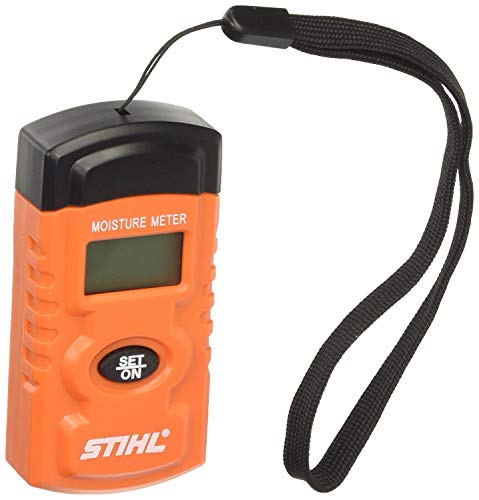
- Ideal for checking moisture in logs
- Very easy to use
- Battery operated
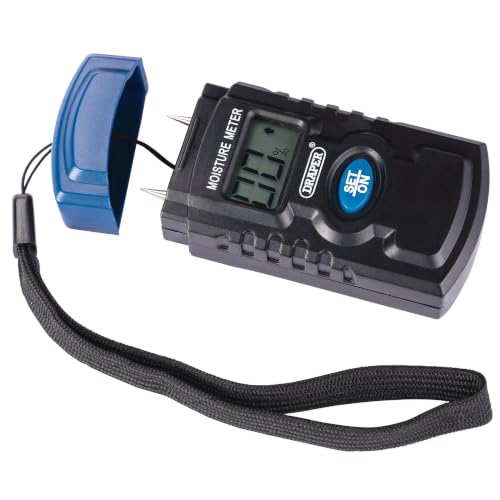
4. Draper pin-type moisture meter – best trade-counter buy
Around £20-30. Draper’s version is stocked through UK tool merchants and is a straightforward pin meter with wood and building-material modes.
Pros: easy to buy over a counter with a warranty behind it; sensible display; competent on both logs and plasterwork.
Cons: nothing about it is exceptional; the case is plainly built to a price; some units read a percentage point or two high against better meters, which is not a problem if you are consistent.
Best for: someone who would rather buy locally than order online.
- Creative design
- Designed to make the product durable over time
- High quality products
- High performance materials
- Products and accessories designed to meet all needs
5. Trotec BM31 – best professional meter
Around £75-100. A proper instrument, pinless rather than pin-based – you press the sensor flat against a freshly split face and it scans up to 40mm deep, with a material-group setting and a hold function for reading in a dim shed.
Pros: no pins to mark or snap off; scans a wider area of the split face in one go, so you are less likely to hit an unrepresentative spot; very well made and backed by Trotec UK directly.
Cons: overkill for firewood, and we would not recommend spending this to check logs alone; pinless readings are more surface-dependent than a pin meter pushed into the core; the price buys a lot of seasoned wood.
Best for: anyone who also works with timber, does damp surveys or restores property.

- Non-Destructive & Fast: Quickly and non-destructively detect moisture distribution in walls, floors, and ceilings using the dielectric measurement method—no probes required!
- Professional Precision: A professional moisture meter providing reliable, near-surface moisture indication, ideal for preliminary testing before deeper damp meter assessments (CM measurements).
- Intuitive & Feature-Rich: Easy-to-read backlit display shows real-time, minimum, and maximum values, plus a hold function to record measurements effortlessly.
- Optimized German Design: Enjoy 100% Trotec development, design, and manufacturing with an automatic switch-off and practice-optimized industrial design for immediate use.
- Ready to Go: This effective damp meter is ready to use immediately, offering a short response time and penetration depth of 5 up to 40 mm.
6. Dual pin and pinless meter – the flexible option
Around £30-50. Combination meters give you a pin mode for logs and a pinless scanning mode for floors, panels and walls.
Pros: one tool covers firewood and building work; the scan mode is genuinely handy for finding a damp patch behind plaster; usually well featured with backlight and hold.
Cons: the pinless side is only as good as the surface it sits on, and split logs are the wrong shape for it; more to go wrong; the pin mode is rarely better than a dedicated pin meter costing half as much.
Best for: DIYers who want one instrument for several jobs.
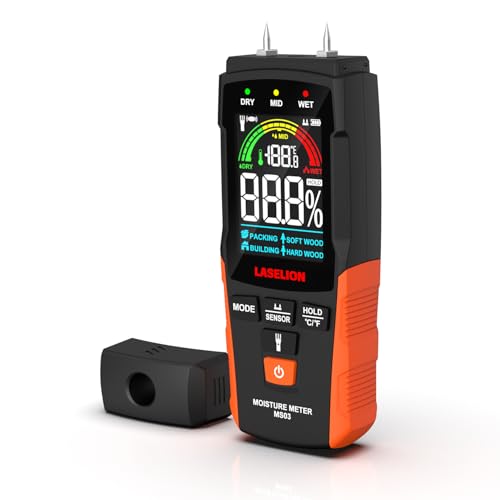
- Dual Measurement Modes: Pin and Pinless measurement options for versatile moisture detection on various materials.
- Wide Application: Ideal for wood, drywall, plaster, concrete, cardboard, and other building materials.
- Pinless Mode: Non-destructive measurement for delicate surfaces like furniture and antique wood.
- Pin Mode: Provides precise readings for thicker materials like lumber, drywall, and wood panels.
- Accuracy & Reliability: Measures moisture content from 0-75% in wood and 0-25% in building materials, with an accuracy of ±4%RH.
Comparison at a glance
| Meter | Type | Best for | Build quality | Around |
| Budget LCD tester | Pin | Casual checking | Basic | £12-20 |
| Brennenstuhl MD | Pin | Logs and materials | Good | £20-30 |
| Stihl wood moisture meter | Pin | Regular firewood use | Excellent | £30-40 |
| Draper pin meter | Pin | Trade-counter buying | Good | £20-30 |
| Trotec BM31 | Pinless, pro | Timber and damp work | Excellent | £75-100 |
| Dual pin/pinless | Both | Mixed DIY use | Varies | £30-50 |
What to look for when buying
- Range: anything covering roughly 5-40% for wood is plenty. Meters advertising 0-99% are usually quoting the building-material scale.
- Pin length and replaceability: longer pins reach past the dried surface layer, and replaceable pins save the whole meter when one bends.
- Display and hold function: you will often be reading in a dim shed. A backlight and a hold button are worth more than an extra decimal place.
- Species or wood-group settings: useful, but do not lose sleep over them for firewood. Consistency between readings matters more than absolute precision.
- Battery type: a common 9V or AAA cell beats a coin cell you have to hunt for in December.
- Auto power-off: cheap meters left on in a coat pocket flatten their battery within a week.
Common mistakes
Testing an unsplit log. The surface is always drier than the core, so a whole log reads low and you burn wet wood believing it is ready.
Testing one log and trusting it. Stacks dry unevenly, particularly the middle of a large pile and anything sitting against a wall. Sample several.
Chasing a single figure. Two meters will rarely agree exactly. What matters is that your meter, used the same way each time, tells you a log has moved from the mid-thirties to under twenty.
Ignoring where the wood came from. If your logs are consistently reading over 25% after a full summer, the problem is usually the store rather than the wood. Air needs to move through the stack, and covering the sides is the classic error.
Frequently asked questions
Does a moisture meter work on kiln-dried logs?
Yes, and it is worth checking. Kiln-dried wood should read in the low to mid teens on arrival, but a bag stored outside uncovered for a fortnight can climb back up.
Will a cheap meter be accurate enough?
For firewood, almost certainly. You are looking for a band rather than a laboratory figure. Where cheap meters fall down is durability, not usefulness.
Can I use it on softwood as well as hardwood?
Yes. Softwood dries faster and the readings are still meaningful. If your meter has species settings, use the softwood group for pine and spruce.
How often should I test?
Once a month through the drying season is plenty, plus a spot-check on any new delivery. Testing every log is unnecessary once you know how your stack behaves.
Our verdict
For most UK households the Stihl wood moisture meter is the sensible buy at around £30-40. It is built to be dropped, it reads consistently and it will outlast several cheaper testers. If you burn a basket a week rather than a stack a month, a £15 two-pin tester from Amazon UK does exactly the same job and you will not feel bad when it eventually dies.
Only go up to the Trotec if you have work beyond firewood. Whatever you buy, split the log before you test it – that single habit will do more for your fires than any upgrade.