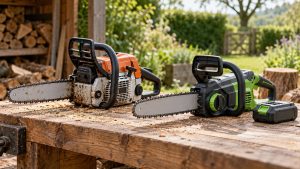
Chainsaw trousers are the one piece of garden kit where we would tell you plainly not to economise. A chainsaw does not stop because you flinched. The protective layers in a decent pair of trousers are designed to pull out into the sprocket and jam the chain, and that is a very short list of things standing between an ordinary afternoon and a serious injury. The same goes whether you run a petrol or cordless chainsaw.
The problem is that the labelling is genuinely confusing. Type A, Type C, Class 1, Class 2, EN ISO 11393 – none of it is obvious, and plenty of people buy the wrong thing or, worse, buy something that only looks like protective wear. This guide sets out what the markings mean, what a sensible domestic kit costs in the UK, and which products are worth the money.
One thing first: protective clothing reduces risk, it does not remove it. If you have never used a chainsaw, book a training course – City & Guilds NPTC and Lantra both run introductory units and they are widely available across the UK. Kit is not a substitute for knowing how a saw kicks back. Our guide to using a chainsaw safely covers the basics before you start.
Quick verdict
- Best trousers overall: Husqvarna Classic 20A Trousers (around £75-100)
- Best budget trousers: Oregon Yukon Chainsaw Protective Trousers (around £55-80)
- Best premium trousers: Stihl Function Ergo Trousers (around £150-180)
- Best for occasional log cutting: YARDMARIS Chainsaw Chaps (around £40-65)
- Best helmet: Oregon Protect Chainsaw Safety Helmet with visor and ear defenders (around £25-35)
- Best boots: Oregon Yukon Rubber Chainsaw Boots (around £55-90)
- Best gloves: STEIN Chainsaw Protective Gloves Class 0 with left-hand protection (around £20-30)
Decoding the labels
Class – chain speed
Under EN ISO 11393, the class number tells you the chain speed the garment was tested against. Class 1 is 20 metres per second, Class 2 is 24 m/s and Class 3 is 28 m/s. Class 1 covers the great majority of domestic and light professional saws and is what most garden users need. Higher classes are heavier, hotter and more expensive.
Type – where the protection is
Type A protects the front of the legs and a wrap around the lower left leg. It is lighter, cooler and correct for ground work where the saw is in front of you – felling, logging, tidying storm damage.
Type C protects the full circumference of both legs. It is heavier and hotter, and it is intended for climbing arborists and anyone working with the saw at odd angles above or behind them.
For domestic use in a garden, Type A Class 1 is the right specification. Do not pay for Type C unless you know why you need it.
What to check on the label
Look for the EN ISO 11393-2 marking for trousers, the CE or UKCA mark, and the class and type shown together. If a listing shows none of this, treat it as workwear rather than protective wear. Cheap unbranded trousers described as chainsaw trousers without a standard reference are not tested to anything.
The best chainsaw safety trousers in the UK
1. Oregon Yukon Chainsaw Protective Trousers – best budget
Around £55-80. Oregon’s entry range is what Screwfix and most UK tool merchants stock, so it is easy to buy and easy to replace.
Pros: the cheapest properly certified Class 1 Type A trousers we would recommend; widely stocked so sizes are usually available; six-layer protective pad; perfectly adequate for a few hours of log cutting a month.
Cons: the outer fabric is basic and wears at the knee faster than the premium brands; ventilation is limited and they get warm quickly in summer; the fit is generous and short legs are hard to find.
Best for: occasional users who need certified protection without spending £120.
No products found.
2. Husqvarna Classic 20A Trousers – best overall
Around £75-100 including VAT. Husqvarna’s Classic range sits deliberately between the budget and professional tiers, and for domestic users it hits the right point.
Pros: noticeably better cut than the budget trousers, with articulated knees that make kneeling and climbing over brash far less awkward; good ventilation panels; hardwearing outer; Husqvarna sizing is consistent and easy to replace like for like.
Cons: still not cheap; the classic fit is roomy and looks bulky if you are slim; needs washing carefully to preserve the protective layers.
Best for: anyone using a saw regularly through the autumn and winter. This is the pair we would buy.

- Husqvarna
- Classic trousers (size 52)
- Garden
- forestry
3. Stihl Function Ergo Trousers – best premium
Around £150-180. Stihl’s premium trousers cost noticeably more than the Husqvarna and Oregon options, generally sold through Stihl dealers or specialist forestry retailers rather than general merchants.
Pros: the best-made trousers here, with excellent stretch panels and a cut that genuinely moves with you; strong ventilation, which matters more than people expect; dealer support and easy access to matching kit.
Cons: expensive for a domestic user; dealer-only purchasing means you cannot just order them on a Sunday evening; the difference over the Husqvarna Classic is real but not transformative for a few hours a month.
Best for: heavy users, or anyone whose work is uncomfortable enough in cheaper trousers that they end up not wearing them.

4. YARDMARIS Chainsaw Chaps – the lightweight alternative
Around £40-65. Protective aprons that strap over your normal trousers, covering the front of the legs.
Pros: cheapest certified route to leg protection; quick on and off, which means you are more likely to actually wear them for a ten-minute job; one size fits most people; cool in summer.
Cons: they can shift out of position if the straps are loose, and coverage is only where they sit; less comfortable for long sessions than proper trousers; no protection at all if worn incorrectly.
Best for: people who cut logs occasionally and would otherwise not bother with protection.

- INSTANT STOP PROTECTION: Our YARDMARIS chainsaw chaps provide 180° multi-layer cut-proof protection to the front of the legs. The 8-layer system combines 6 cut-resistant layers with 2 padding layers, instantly locking and preventing cuts in case of accidental contact. Stopping the chain upon contact for maximum safety.
- INTERNATIONAL CERTIFICATION: Complies with OSHA 1910.266, UL certified, meets ASTM F1897-20 & ASTM F3325-20, and satisfies EN ISO 11393-2. Protection Class 1 (20 m/s) rated for professional and private use.
- ADJUSTABLE COMFORT FIT: This apron-style chainsaw chap is engineered for a secure and comfortable fit, offering essential leg protection during chainsaw operation. Designed for secure comfort with 4 adjustable buckles per leg and a waist (27.6"-52"). Available in two leg lengths (35.4" Regular, 39.4" Long) and three colors (Black, Orange, Khaki). Features a practical tactical pocket for secure storage of phones, wallets, or essential tools.
- PREMIUM FABRIC: Outer layer made of comfortable and breathable double-sided polyester-cotton fabric, designed for durability. Fitted with premium ITW components that deliver dependable performance in harsh environments, while maintaining cool breathability for guaranteed all-day comfort.
- INSTANT FIBER LOCK: The protection mechanism utilizes a special 6-layer cut-resistant fabric inside the chainsaw pants. Upon contact with the chain sprocket, these fibers rapidly wrap around the sprocket, causing an instantaneous stop of the saw chain, thereby protecting your legs.
The rest of the kit
Helmet, visor and ear defenders
A combination helmet is the sensible buy – shell, mesh visor and ear defenders in one unit, typically £25-35 for something like the Oregon Protect. Check the shell date stamp when it arrives, because helmets have a service life measured from manufacture, and replace after any significant impact. Mesh visors keep chips out and do not fog; clear polycarbonate visors give better vision in the rain but mist up.

- Safety combination: Protect chainsaw helmet has built-in ear protectors and steel mesh visor
- Impact resistant: Strong, durable, lightweight hard hat suitable for chainsaw work and other outdoor tasks - giving essential protection for face, eyes, ears and head
- Features: Wide and durable stainless steel mesh visor which flips up and down. Ear muffs protect from noise of up to 25.9 decibels
- Adjustable: Safety helmet has a six-point adjustable harness to ensure a perfect fit
- Comfortable: Designed for maximum comfort. Includes ventilation holes for high breathability
Gloves
Around £20-30 for chainsaw gloves with protective padding on the back of the left hand, which is the hand nearest the bar. Look for EN 381-7 or the equivalent ISO 11393-4 marking. Ordinary rigger gloves give grip and warmth but no chain protection at all. Honestly, gloves are the item most people skip, and they are cheap.

- CERTIFIED CHAINSAW PROTECTION Class 0 (16 m/s) chainsaw protective gloves built to EN 381-7 for professional forestry and arborist work. Designed for safe chainsaw handling with LEFT-HAND-ONLY saw protection.
- DURABLE KEVLAR-STITCHED REINFORCEMENT Heavy-duty Kevlar yarn stitching and reinforced rubber palm areas improve grip and resistance to wear during demanding outdoor tasks.
- COMFORTABLE & SECURE FIT Soft leather upper and ergonomically shaped palm give excellent dexterity. Elasticated cuffs with Velcro adjustment help keep out sawdust and debris.
- HIGH TENACITY SAFETY FIBRES Multi-layer chainsaw protection fibres in the left glove provide essential defence against unexpected contact, offering peace of mind during cutting operations.
- THREE SIZES AVAILABLE Choose from sizes 8, 9 or 10. Use the clear size chart in the images to find your correct fit. Designed for professional users in forestry, tree surgery and grounds maintenance.
Boots
Around £55-90 for Class 1 chainsaw boots such as the Oregon Yukon, which combine chain-protective layers with a steel toecap and a decent grip sole. Rubber chainsaw wellingtons are cheaper and better in wet ground; leather boots give more ankle support on slopes. Either is far better than the walking boots most people wear.
No products found.
First aid and the rest
A large wound dressing in your pocket and a charged phone are not optional when working alone. Most arborist first aid kits are built around this. Tell someone where you are and when you expect to finish.
What a full kit costs
| Item | Budget option | Sensible option | Premium |
| Trousers | Oregon Yukon, £55-80 | Husqvarna Classic 20A, £75-100 | Stihl Function, £150-180 |
| Helmet set | Oregon Protect, £25-35 | Husqvarna combination, £55-80 | Stihl Advance, £110-160 |
| Gloves | Generic Class 0, £20-30 | Oregon or Husqvarna, £30-45 | Stihl, £45-60 |
| Boots | Rubber Class 1, £55-75 | Oregon Yukon leather, £75-100 | Haix or Husqvarna, £150-220 |
| Total | Around £155-220 | Around £235-325 | Around £455-620 |
A budget kit at roughly £195 is not a compromise on certification – every item above is tested to the same standards as the expensive versions. What you gain higher up the range is comfort, ventilation and how long it lasts. That matters more than it sounds, because uncomfortable kit is kit that gets left in the shed.
Fit, care and replacement
- Try trousers on with your normal working layers underneath. Protective trousers run bulky and a size that fits in a shop over jeans may be tight over a fleece in January.
- Wash according to the label only. Most protective layers should be washed at low temperature without fabric conditioner, and never tumble dried on high heat – the protective fibres matt and lose their bulk.
- Never repair a cut or tear in the protective panel. Once the layers are damaged the garment is finished, and a patched pair gives false confidence.
- Replace after any chain contact, however minor it looks. The pad has done its job once.
- Check the fastenings and zips regularly. Trousers that will not stay up get worn loose, and loose trousers snag.
- Store dry. Damp storage rots the outer shell and stains the pad, and you will not notice until it matters.
Frequently asked questions
Do I legally have to wear chainsaw PPE at home?
Health and safety law covers work activity rather than private householders doing their own garden. That said, if you employ anyone or work on someone else’s property for payment, the obligations apply. In practice the question is not what is required but what happens if you slip.
Are chaps as good as trousers?
Certified chaps meet the same standard for the area they cover. The difference is coverage and how reliably they stay in place. Trousers are better; chaps that you actually wear beat trousers left hanging in the garage.
How long do chainsaw trousers last?
Manufacturers commonly quote a service life of several years for domestic use, but there is no fixed expiry. Replace when the outer fabric is worn through to the pad, after any chain contact, or if the protective layer has become matted or contaminated with oil.
Can I buy secondhand?
We would not. You cannot see whether the pad has been damaged, contaminated or washed at the wrong temperature, and that is the entire value of the garment.
Our verdict
Buy Class 1 Type A trousers, and buy them before you buy anything else. The Husqvarna Classic 20A at around £75-100 is the sensible middle ground for a domestic user – well cut, well ventilated and easy to replace. If budget is tight, the Oregon Yukon trousers at around £55-80 are properly certified and there is no shame in them.
Add a combination helmet, Class 0 gloves and Class 1 boots and you have a complete kit for well under £250. That is less than most people spend on the saw itself, and it is the part of the purchase we would never talk anyone out of.
Related reading: our guides to the best chainsaw sharpeners UK, the best log splitters UK, the best splitting axes and mauls UK, and the best log stores UK.