If you burn wood, late August is the moment the job starts. Anything you split now has a fighting chance of being properly seasoned by the time the stove goes on, and anything you leave until November will hiss and smoke its way through winter. The splitting maul is honest work for a while, but most people reach a point where an afternoon of it costs them a week of shoulders.
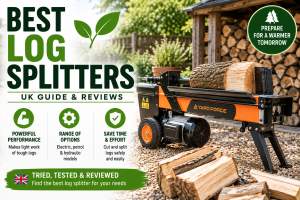
A log splitter takes that away. The trouble is the market runs from £30 kindling gadgets to £2,000 petrol machines, and the specification that actually matters — tonnage against the wood you burn — is the one buyers usually skip past. We have set out below what we would buy at each level, and where the money stops being worth it for an average UK garden.
Quick verdict
- Best overall for most households: SIP 5-tonne electric log splitter (around £220-260)
- Best budget option: Kindling Cracker cast iron splitter (around £45-60)
- Best for regular hardwood: Hyundai HYLS7000HE 7-tonne horizontal (around £280-320)
- Best build quality: Forest Master FM5D-TC 5-tonne (around £290-330)
- Best for small stores and sheds: Sealey LS450H foot-operated log splitter (around £90-130)
How much tonnage do you actually need?
Tonnage is the force the ram applies. It is the only figure worth arguing about, and the honest answer is that most UK gardeners buy more than they need and then find the machine too heavy to move.
As a rough guide: 4 to 5 tonnes handles softwood, well-seasoned logs and rounds up to around 25cm across, which covers the great majority of domestic firewood. Around 7 tonnes gives you comfortable margin on seasoned ash, birch and beech, and will get through the occasional knotty piece. Ten tonnes and above is smallholding territory — green oak, elm, big rounds and stringy grain.
The catch is that force is not the only variable. Ram stroke sets the maximum log length (usually 37cm to 52cm on domestic machines), and cycle time sets how fast you work. A 4-tonne machine with a fast cycle will out-produce a slow 7-tonne one on easy wood, because you spend most of your day waiting for the ram to return rather than fighting the split.
Electric, petrol or manual?
Electric hydraulic
The right answer for nearly everyone. They run off a normal 13-amp socket, make no fumes, and are quiet enough to use in a garage or under a carport without upsetting the neighbours. The limit is genuine but narrow: you need mains power where you split, and a domestic motor tops out somewhere around 7 to 8 tonnes.
Petrol
Faster cycles, far more force, and no cable. It is also loud, heavy, needs servicing, and costs three or four times as much. Unless you are cutting several cords a year or working away from power, it is the wrong tool for a domestic garden.
Manual
A foot pump or lever driving a small hydraulic ram, or a simple cast iron wedge you hit with a mallet. No power, no noise, nothing to break. Slow, and hard work above about 20cm diameter, but genuinely useful for kindling and for anyone splitting a bag or two at a time.
The best log splitters in the UK
1. Kindling Cracker cast iron splitter – best budget buy
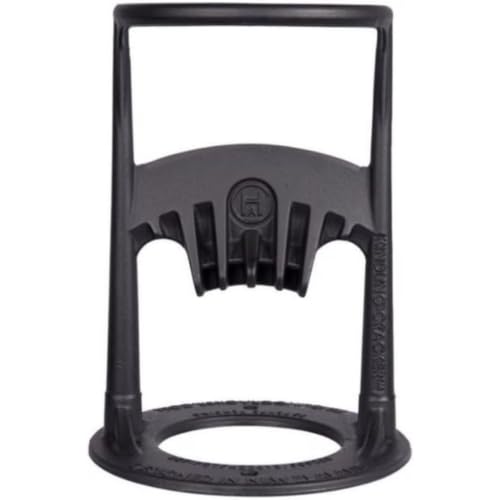
Around £45-60. Not a log splitter in the hydraulic sense at all: a cast iron ring with a fixed blade in the middle. You stand a piece of wood on the blade and hit it with a mallet or the back of an axe. The ring catches the pieces so nothing flies at your shins, and your hands stay well clear of the striking line.
Pros: nothing to go wrong; genuinely safer than an axe for kindling; costs less than a decent maul.
Cons: it is a kindling tool, not a log tool — anything over about 15cm is a struggle; needs bolting to a block or it walks about.
Best for: anyone who already gets logs delivered ready-split and just needs kindling.
2. Sealey LS450H foot-operated log splitter – no power needed
Around £90-130. A foot-operated hydraulic ram on a low horizontal frame, rated in the region of 4-5 tonnes. You pump with your foot and the ram creeps forward. Slow – count on ten to fifteen seconds a split – but it will part seasoned softwood without complaint, and it weighs a fraction of an electric machine.
Pros: works anywhere; light enough to carry one-handed; nothing to service.
Cons: tedious over a big load; the low working height means a lot of bending; struggles on knots.
Best for: small quantities, allotments, and anywhere without a socket.


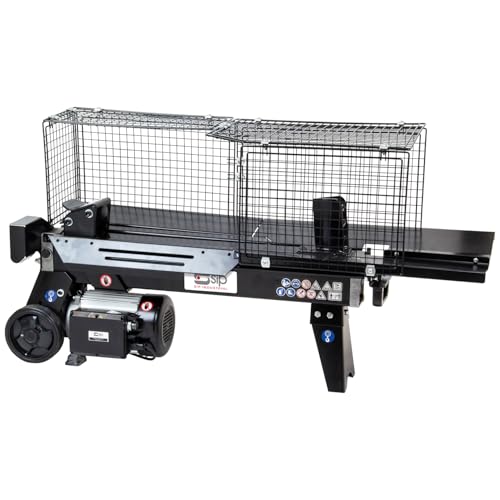
3. SIP 5-tonne electric log splitter – best overall
Around £220-260. A 2.2kW corded horizontal machine taking logs up to 52cm, and the one we would put in most gardens. It is a straightforward design with no frills to go wrong – a solid motor and ram that gets on with the job. The ram returns automatically, which matters more than it sounds when you are working alone and want both hands free for the next log.
Pros: strong value; handles longer logs than most machines in this price band; fast enough cycle to keep momentum; supplied with a stand.
Cons: 5 tonnes will still stall on knotty oak or anything green; it is bulkier than a compact vertical splitter; worth checking stock, as horizontal machines like this can sell out in autumn.
Best for: households burning seasoned softwood and moderate hardwood, up to a few cubic metres a year.
4. Forest Master FM5D-TC 5-tonne – best build quality
Around £290-330. Forest Master are a UK company and their after-sales support is the reason people keep recommending them. The FM5D-TC is a compact 5-tonne machine with a table stand included, so you are not buying a second item to get it to a sensible working height. Build is noticeably more solid than the budget end — thicker steel, better welds, and spares that are actually available in a year’s time.
Pros: excellent support and spares; integrated stand; genuinely durable; sensible 5-tonne rating for domestic wood.
Cons: costs more than the Titan for one extra tonne; heavier to move about.
Best for: anyone who intends to keep the machine for a decade and wants to be able to fix it.

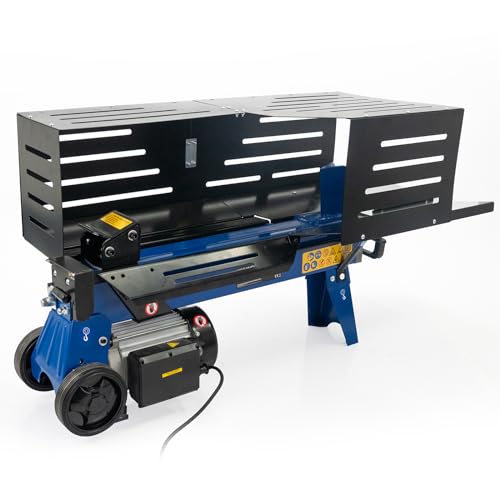
5. Hyundai HYLS7000HE 7-tonne horizontal – best for regular hardwood
Around £280-320. A 2.3kW horizontal machine with a 7-tonne rating, a 520mm log capacity and a steel protection cage. The extra force and the longer stroke are the reasons to choose it: if your supplier delivers half-metre lengths of ash or beech, the 37cm machines simply will not take them.
Pros: handles seasoned hardwood without drama; long log capacity; cross-wedge option on some versions quarters a log in one pass; supplied with a stand.
Cons: heavy, at a weight that makes moving it a two-person job; the cage is fiddly to work around; more machine than a small household needs.
Best for: wood burners running most of the winter, or anyone buying hardwood in long lengths.
6. Forest Master FM16D 8-tonne – the step up
Around £420-480. Where domestic electric machines run out of road. Eight tonnes on a 230V motor is close to the practical limit, and it will part most things you can lift onto it. Worth it only if you have consistently defeated a smaller machine.
Pros: genuine hardwood capability without going petrol; still runs off a normal socket.
Cons: expensive; very heavy; overkill for a stove used at weekends.
Best for: smallholders and anyone processing their own felled timber.

At a glance
Model | Force | Max log | Power | Around |
Kindling Cracker | Manual | ~15cm | None | £45-60 |
Sealey LS450H | ~4-5 tonne | ~25cm | Foot pump | £90-130 |
SIP 5-tonne electric | 5 tonne | 52cm | 2.2kW mains | £220-260 |
Forest Master FM5D-TC | 5 tonne | 37cm | 2.2kW mains | £290-330 |
Hyundai HYLS7000HE | 7 tonne | 52cm | 2.3kW mains | £280-320 |
Forest Master FM16D | 8 tonne | 52cm | 3kW mains | £420-480 |
Using one safely
- Set the machine at waist height on a stand or solid bench. Splitting at ankle height is how backs get hurt.
- Use both hands on the controls. Every hydraulic splitter sold in the UK has two-handed operation for a reason – never defeat it.
- Stand a log on its flat cut end, not on its side, and place it square against the wedge.
- Split from the outside in on big rounds. Taking slabs off the edge is far easier than driving through the centre.
- If the ram stalls, release it, turn the log 90 degrees and try again. Do not hold the pressure on – that is how seals go.
- Keep the hydraulic oil topped up and check the level before each session. Running one low is the single most common way these machines die.
Seasoning: the part that actually determines how well it burns
Splitting is only half the job. Freshly felled wood is around 50 per cent moisture and will not burn properly; you want it under 20 per cent. Splitting helps enormously because it exposes the inside of the log, but the wood then needs a year for softwood and closer to two for oak, stacked off the ground with the sides open to the wind and only the top covered.
This is why late summer is the right time to be doing it, and why a dry, ventilated stack matters as much as the splitter. We have covered the storage side separately in our guide to the best log stores.
Frequently asked questions
Is 4 tonnes enough?
For seasoned softwood and most seasoned hardwood at sensible diameters, yes. If you regularly split green wood, oak, or rounds over 30cm, go to 7.
Can I run an electric splitter off an extension lead?
Only a heavy-duty one, fully unwound. These motors draw hard on start-up and a thin coiled lead will drop voltage, overheat and eventually kill the motor.
Horizontal or vertical?
Horizontal for domestic use. Vertical machines exist so you do not have to lift heavy rounds onto a bed, which matters at forestry scale but rarely in a garden.
Do they work on wet wood?
They will split it, but green and wet wood is much harder going and demands more tonnage. Split it anyway – it seasons far faster once split.
Our verdict
For most UK households the SIP 5-tonne electric splitter is the sensible buy: enough force for ordinary firewood, straightforward to use, and priced so that it pays for itself against a couple of deliveries of ready-split logs. If you want the machine to still be working in ten years, and to be able to get parts for it, spend the extra on the Forest Master FM5D-TC. And if you burn hardwood all winter or take delivery in half-metre lengths, the Hyundai 7-tonne is the one that will not frustrate you.
Whatever you buy, buy it now rather than in October. Wood split in August burns properly next winter; wood split in December does not.